
Travelers often picture Egypt’s pyramids first, but the country’s past stretches far beyond Giza. Across the Nile Valley and into the deserts, temples, tombs, and citadels stand as reminders of how Egyptians worshipped, ruled, and defended their lands. Some were carved into cliffs, others hidden underground, and many remain among the world’s most ambitious building projects. Their survival through thousands of years, wars, and even relocation efforts shows the strength of Egyptian culture. Exploring these sites reveals not just monuments but a continuous thread of history that shaped civilization itself.
1. Abu Simbel Temples (Ramesses II and Nefertari), Nubia
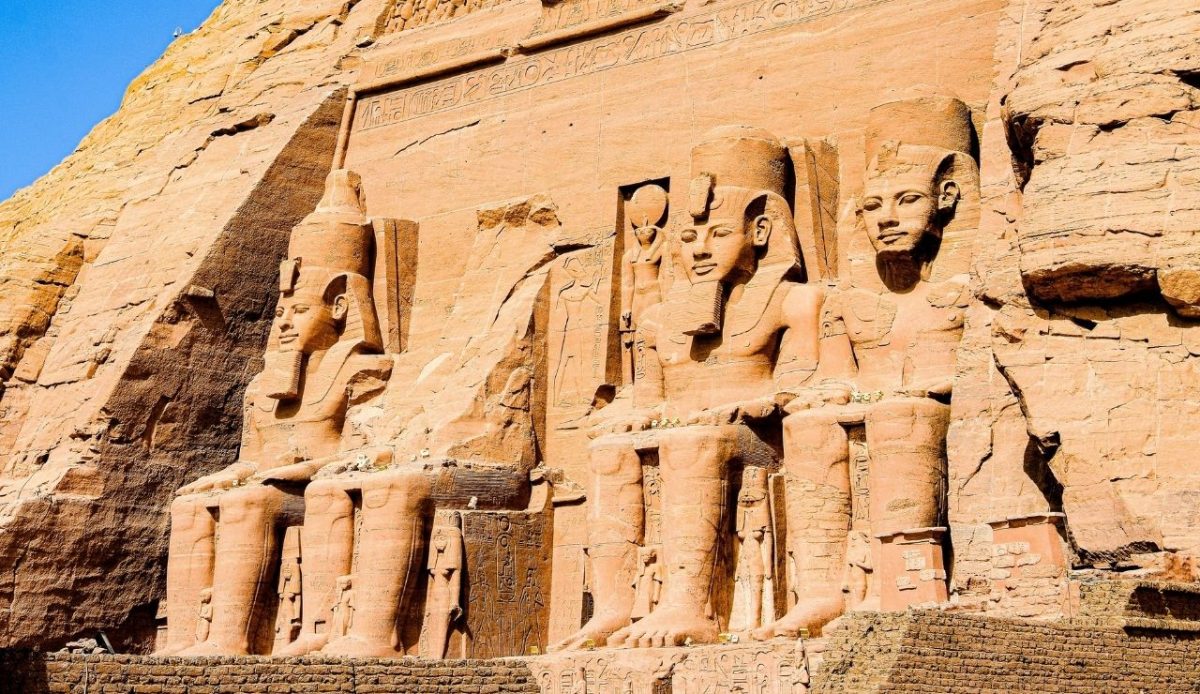
Carved into a sandstone cliff in southern Egypt, the twin temples at Abu Simbel honor Pharaoh Ramesses II and his queen, Nefertari. The massive statues of Ramesses guard the entrance, while carvings inside depict his military victories and devotion to the gods. The smaller temple beside it honors Nefertari and the goddess Hathor, an unusual tribute for a queen. In the 1960s, UNESCO-led engineers carefully cut the temples into blocks and moved them higher to save them from the Aswan High Dam’s rising waters. Twice a year, the inner sanctuary still aligns with the sun, a feat of precise astronomical design.
2. Karnak Temple Complex, Thebes (Luxor)
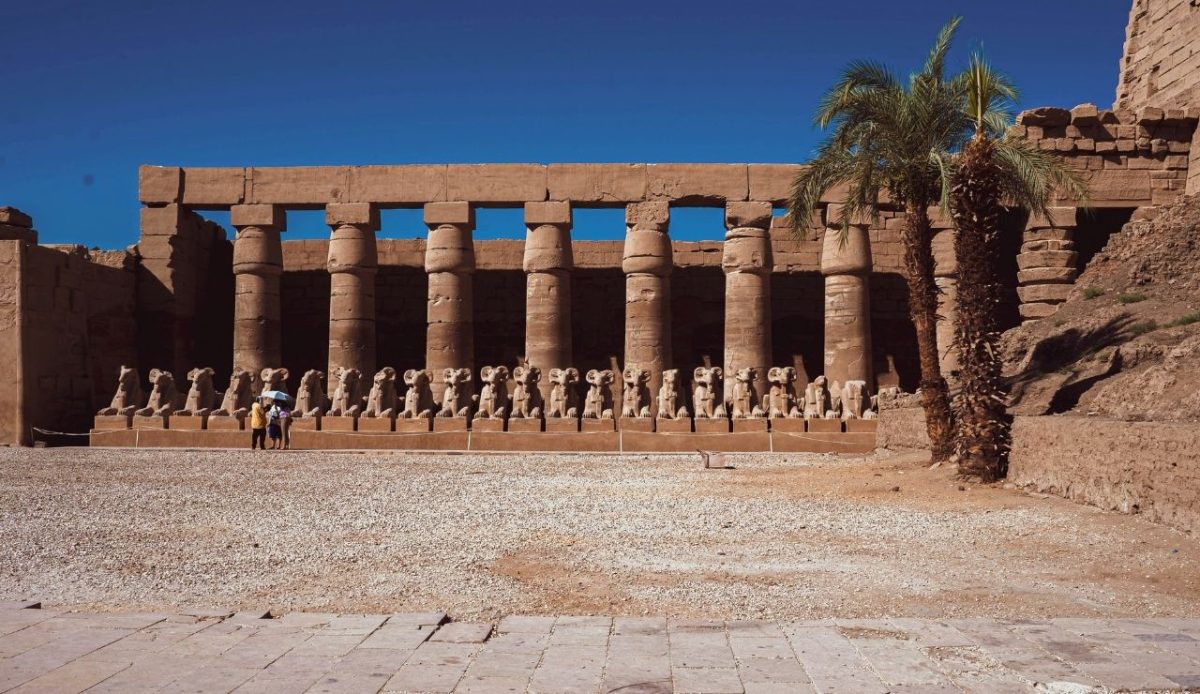
The Karnak Temple Complex in Luxor is one of the largest religious sites in the world. Built over nearly 2,000 years, it served as the spiritual center of Thebes and honored the god Amun-Ra. Visitors encounter towering pylons, vast courtyards, and the Hypostyle Hall, with 134 massive columns arranged in rows. Pharaohs expanded and modified Karnak, leaving inscriptions that record their achievements. The complex also features sacred lakes, chapels, and obelisks. Rituals and festivals, such as the Opet procession, linked Karnak with Luxor Temple, reinforcing its central role in state and religious life.
3. Luxor Temple, East Bank of Luxor
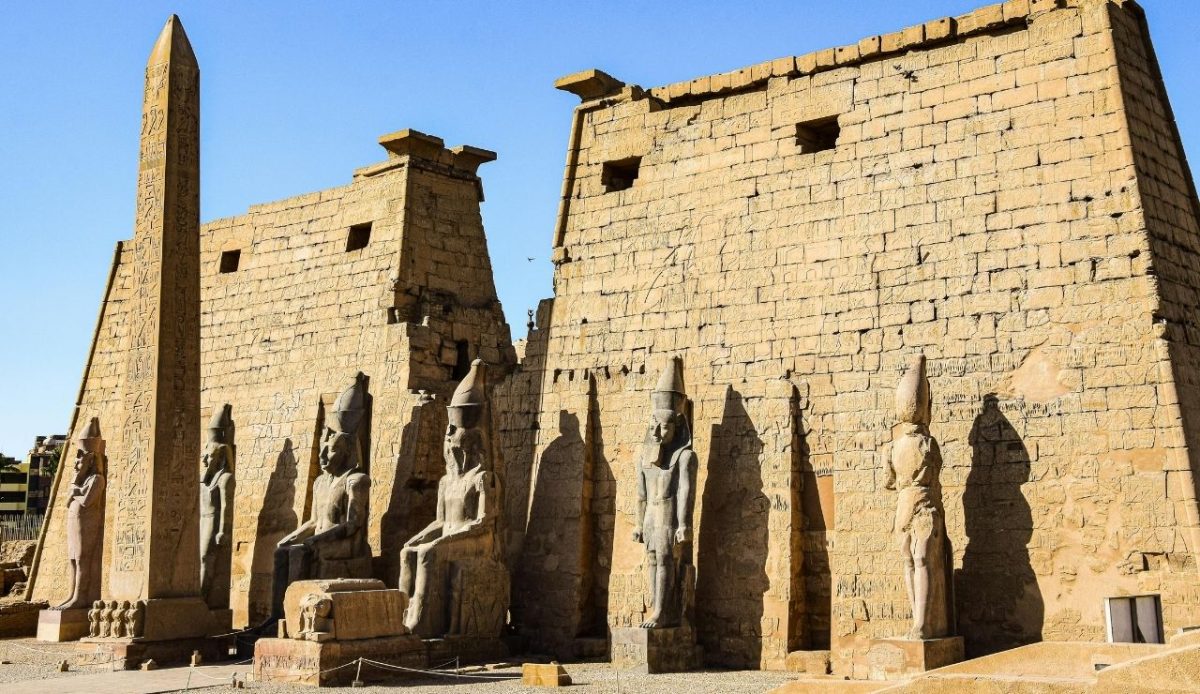
Luxor Temple was closely tied to royal power. It hosted the annual Opet Festival, when statues of Amun, Mut, and Khonsu were carried from Karnak to Luxor in a grand procession that symbolized renewal. Built mainly by Amenhotep III and later expanded by Ramesses II, the temple features colonnades, giant statues, and obelisks. Night lighting gives visitors a sense of the grandeur that once accompanied its ceremonies. Later rulers, including Alexander the Great, added chapels to the complex, and a mosque still in use today stands within its walls, showing its long, continuous history.
4. Mortuary Temple of Hatshepsut (Deir el Bahri), West Bank
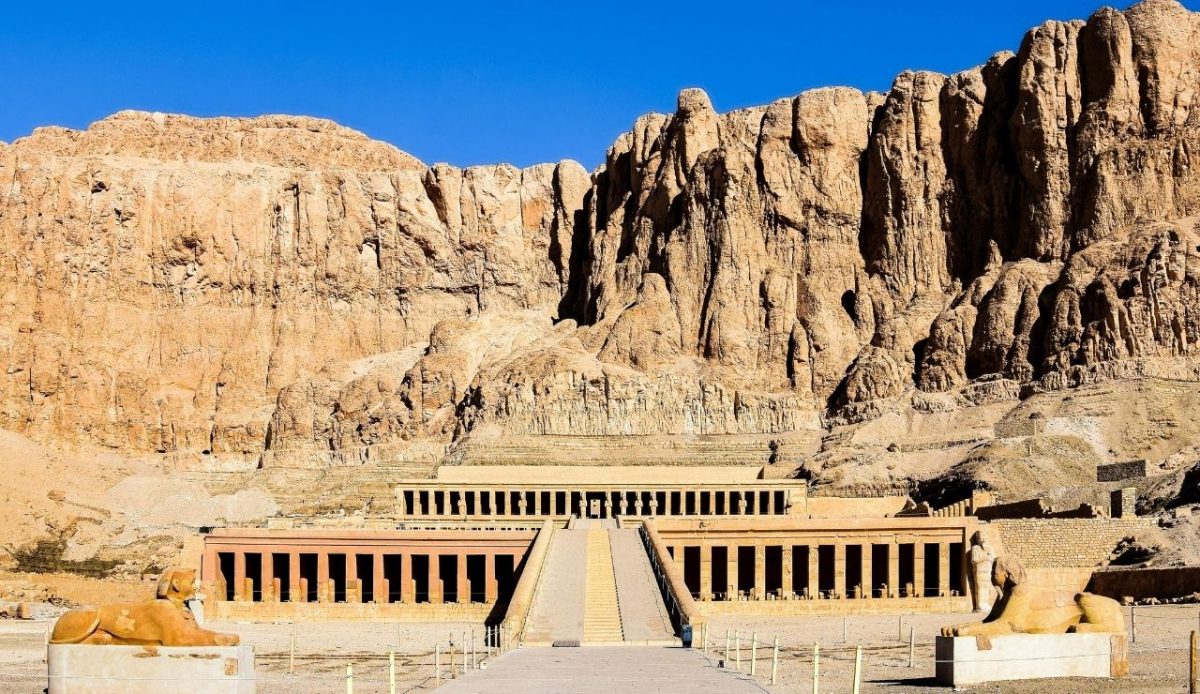
Built against the cliffs of Deir el Bahri, the Mortuary Temple of Hatshepsut is one of Egypt’s most striking monuments. Terraces connected by ramps align with the natural rock face, creating a dramatic setting. The temple honors Queen Hatshepsut, one of Egypt’s few female pharaohs, and contains chapels for Amun, Hathor, and Anubis. Wall reliefs show her divine birth and her expedition to the Land of Punt. These scenes reveal how she used art and architecture to legitimize her reign. Excavations also uncovered evidence of gardens with exotic plants, adding to its grandeur.
5. Valley of the Kings, West Bank Luxor
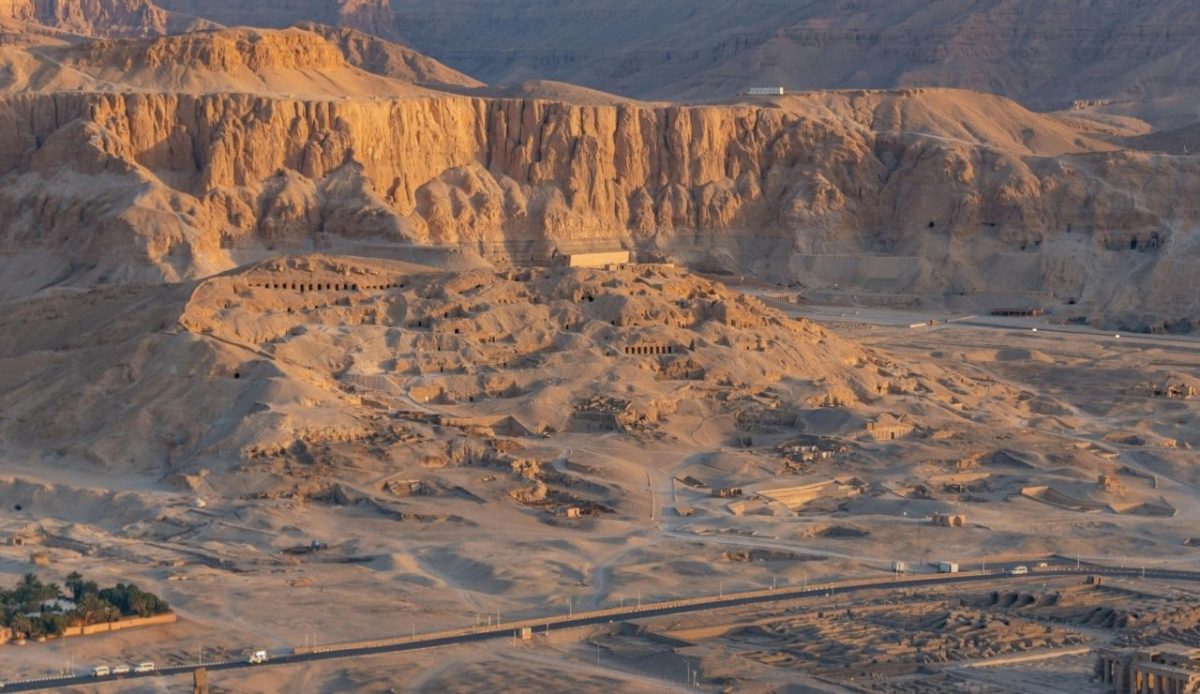
The Valley of the Kings served as the burial ground for New Kingdom pharaohs and nobles. Builders hid underground tombs within desert cliffs to protect treasures and royal remains from robbers. The most famous discovery is Tutankhamun’s tomb, found almost intact in 1922. Walls are painted with colorful murals depicting the soul’s journey through the afterlife. While some tombs are modest, others, like the tomb of Seti I, display intricate designs. Archaeologists continue to study unopened chambers, using modern technology to map hidden structures beneath the valley’s surface.
6. Temple of Philae (Isis), Agilkia Island, Aswan
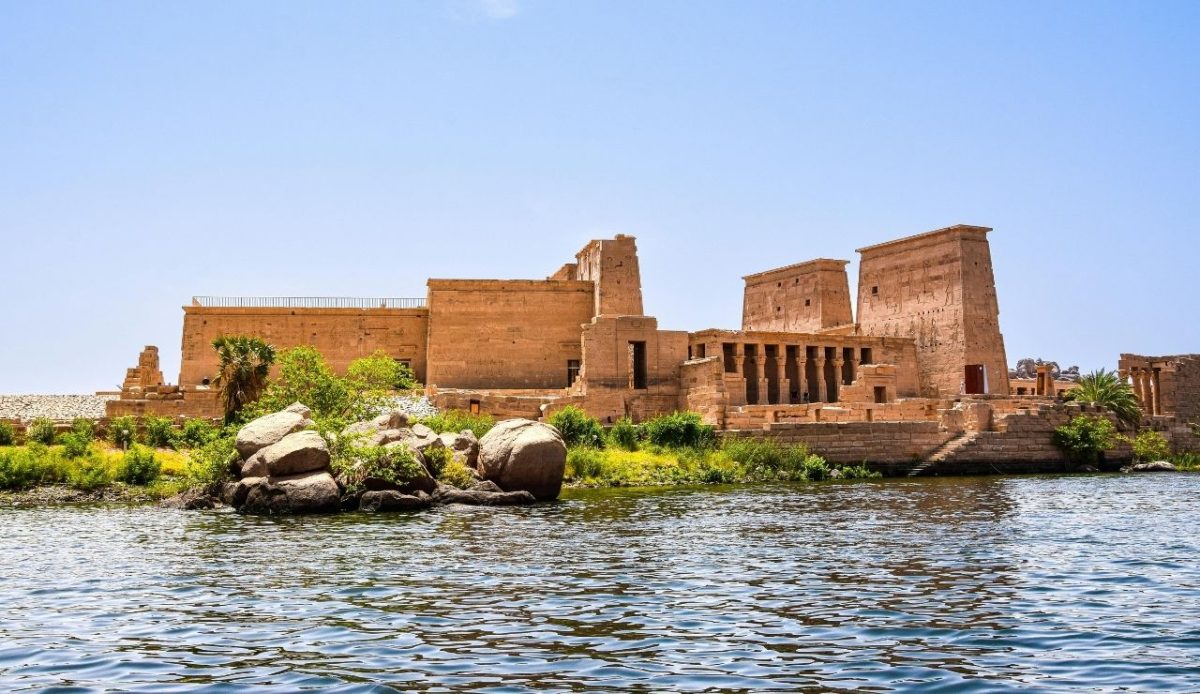
The Temple of Philae, dedicated to Isis, was one of the last active sanctuaries of ancient Egypt. UNESCO-led teams moved the complex from Philae Island to Agilkia Island in the 1960s after the Aswan High Dam threatened to submerge it. The temple combines Pharaonic and Greco-Roman elements, with pylons, colonnades, and carvings that tell myths of Isis, Osiris, and Horus. It remained a center of worship well into the Roman era. Pilgrims traveled to Philae for centuries, and inscriptions show it stayed sacred until Christianity spread across Egypt in the 6th century.
7. Temple of Edfu (Horus), Edfu
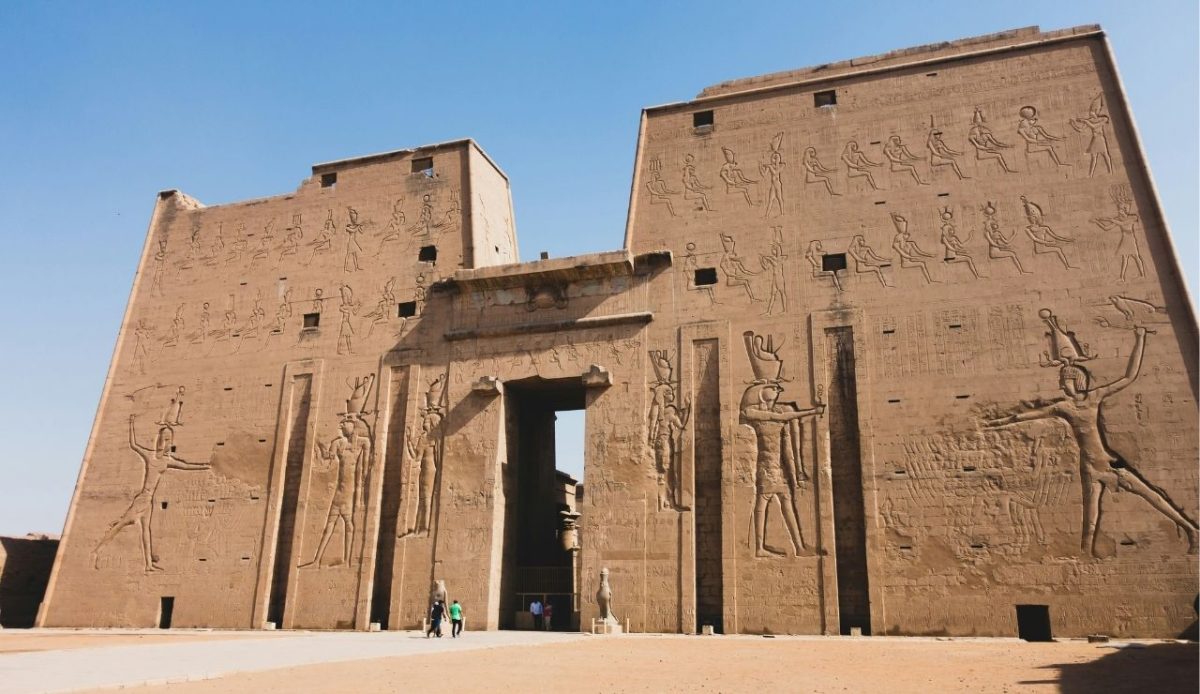
The Temple of Horus at Edfu is one of the best-preserved temples in Egypt. Built during the Ptolemaic period, it honors Horus, the falcon-headed god of kingship and protection. Towering pylons and detailed reliefs narrate the myth of Horus avenging his father Osiris by defeating Seth. Visitors walk through halls that illustrate the grandeur and precision of temple rituals. The structure also provides clear historical information about religious practices. Archaeological records reveal that priests used the temple as a teaching center for myths, healing practices, and ceremonial rites.
8. Temple of Kom Ombo (Sobek and Haroeris), Kom Ombo
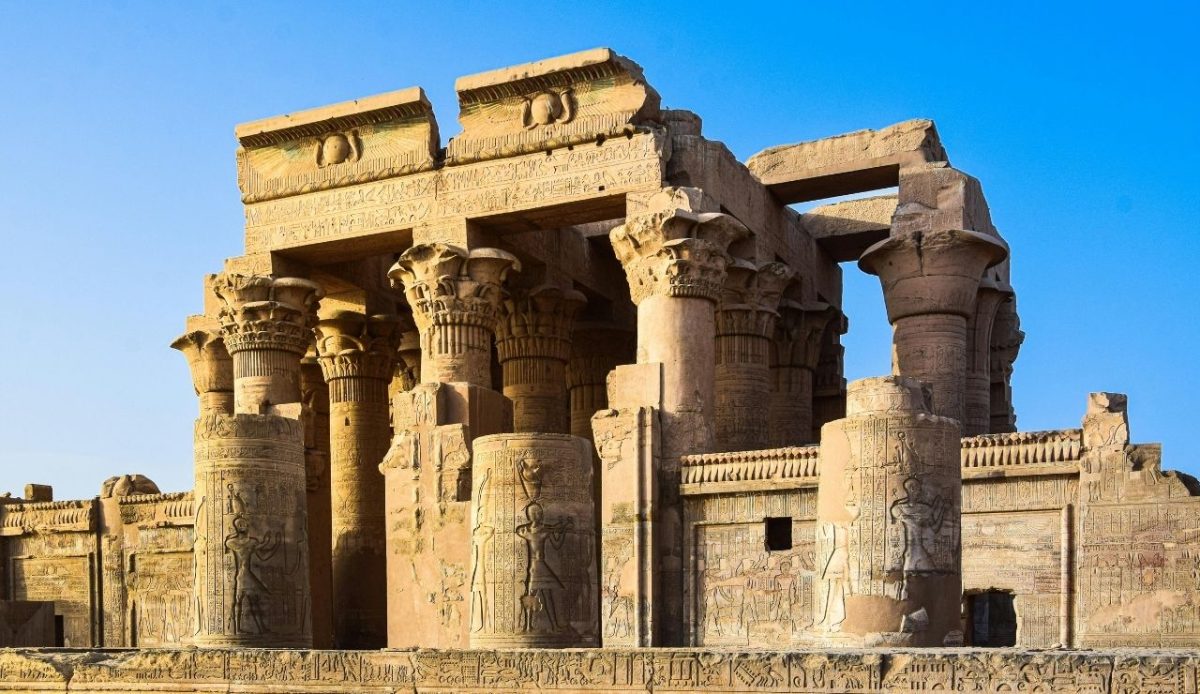
The Temple of Kom Ombo is unique because it honors two gods at once, including Sobek, the crocodile god, and Haroeris, a form of Horus. Its symmetrical design features duplicate halls and sanctuaries so that both deities receive equal devotion. Wall carvings show medical instruments, calendars, and scenes of offerings, giving insight into ancient knowledge. A nearby museum displays mummified crocodiles linked to Sobek’s worship. Archaeologists note that Kom Ombo also served as a center for healing, where priests studied medicine and astronomical cycles alongside religious rituals.
