
Long before interstates cut across the country, small towns built wooden bridges with roofs to protect the beams from rain and snow. These covered bridges were strong, practical, and built to last using timber pegs and handcrafted joints instead of metal. They connected farms to markets, let kids walk to school, and gave neighbors a place to wave hello on their daily rounds. Thousands once stood across America, but fewer than 800 remain today, scattered through backroads and river valleys like echoes of a quieter time. Each one carries the mark of its builders and the rhythm of a life not ruled by speed. For families, these bridges are more than wood and stone. They are places to slow down, share stories, and step into a past that still stands tall. This list takes you to 12 of the most authentic covered bridges still open to the road and ready to be found.
1. Cornish Windsor Covered Bridge, Windsor
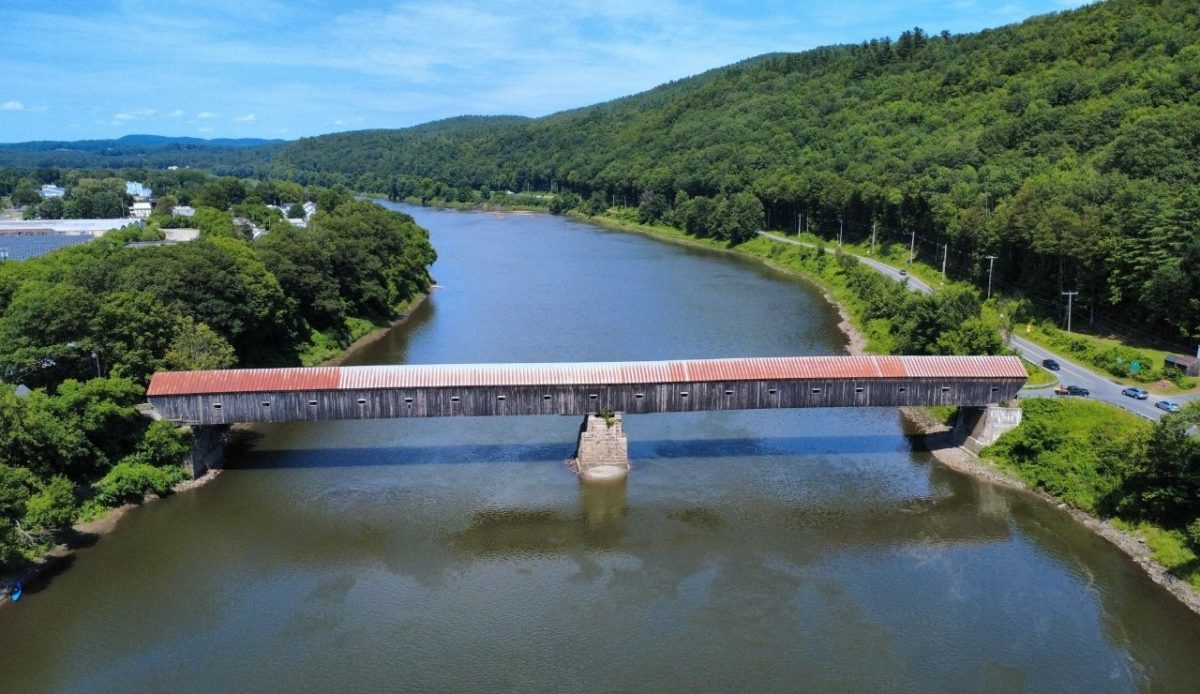
Linking Vermont and New Hampshire, this 460-foot red bridge is the longest two-span covered bridge in the nation and a marvel of 19th-century carpentry. Built in 1866 it replaced earlier versions washed out by floods and was raised higher to avoid future damage. Heavy timber trusses hold up the roof while wide eaves keep the floor dry in storms. Drivers slow down when they enter because the light fades and the sound echoes inside the long chamber. Families stop to take photos, and kids love how their voices bounce off the beams overhead. Crews repaint it every few years and check for rot each spring. Standing here feels like stepping into a time when roads followed rivers and life moved at the pace of a walking horse.
2. Eldean Covered Bridge, Mesopotamia
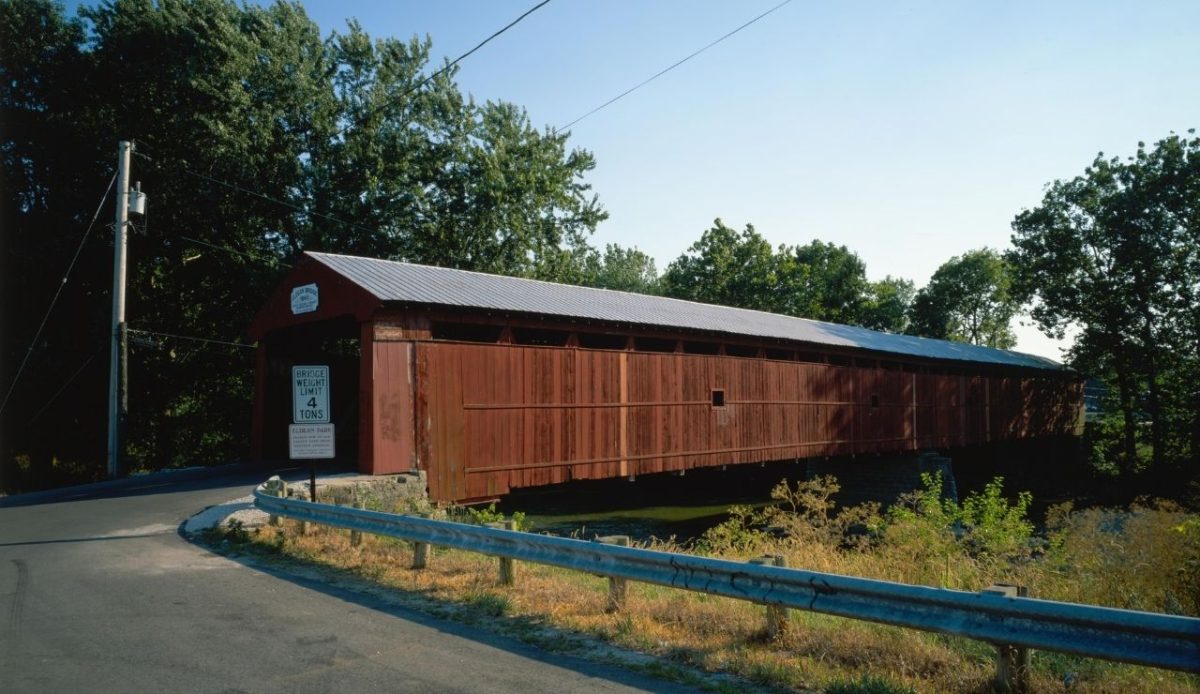
This Ohio bridge from 1860 is one of only two left in the country with a rare Long truss design that spreads weight across crisscrossed oak timbers without metal supports. At 209 feet, it once carried farm wagons over a creek and now serves as a living example of pre-industrial engineering skill. Wooden pegs hold joints together, and the thick frame flexes slightly under load instead of cracking. Rain runs off its steep roo,f and high walls block wind and snow during harsh winters. No cars pass through today but visitors walk its length, reading signs that explain how such an old bridge still stands firm. Engineers come from far away just to study its frame and see how stress moves through hand-cut wood.
3. Bridgeport Covered Bridge, Penn Valley
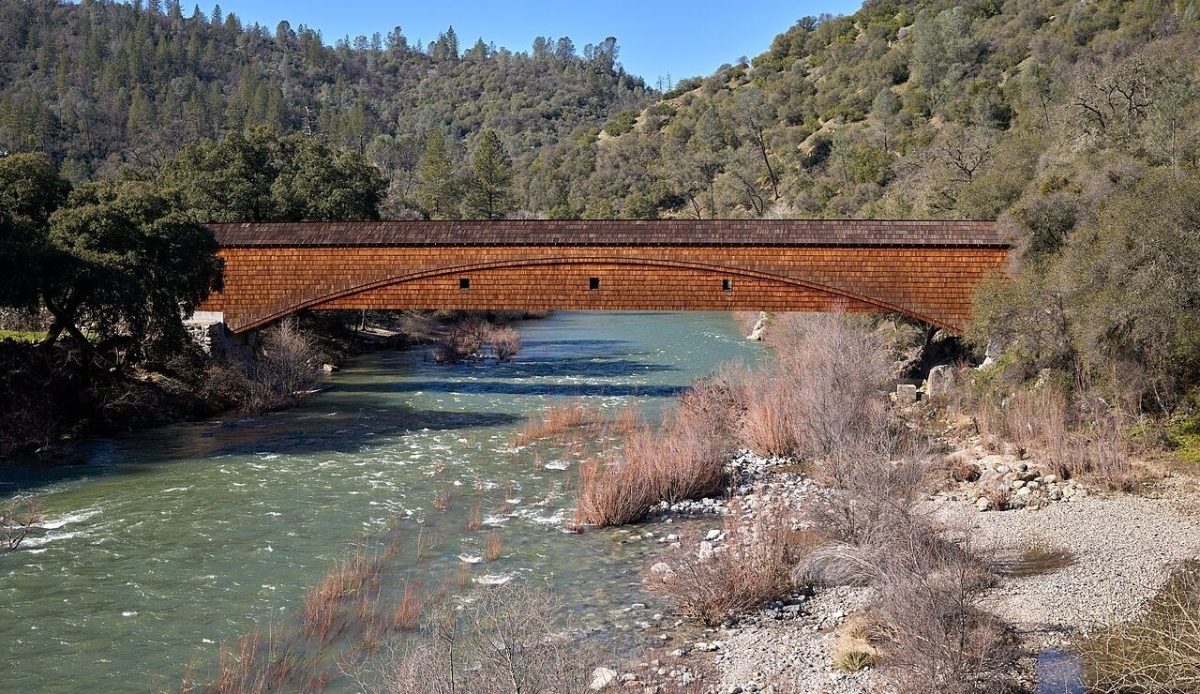
Built in 1862 during the Gold Rush, this Sierra Nevada bridge once carried miners and mule trains loaded with gear through rough mountain terrain. At 233 feet, it is the longest single-span wooden covered bridge in the U.S. and still rests on its original stone piers. Thick Douglas fir beams form a strong truss system that has held for over 160 years despite floods and rot. High walls gave teamsters shelter from snow and wind as they crossed Deer Creek below. Saved from ruin multiple times, locals raised its foundation after floodwaters nearly swept it away. Today, you can walk its full length, hearing birds call through slats and seeing sunlight stripe the worn planks. It never had lights, so travelers had to cross before dark.
4. Bunker Hill Covered Bridge, Claremont
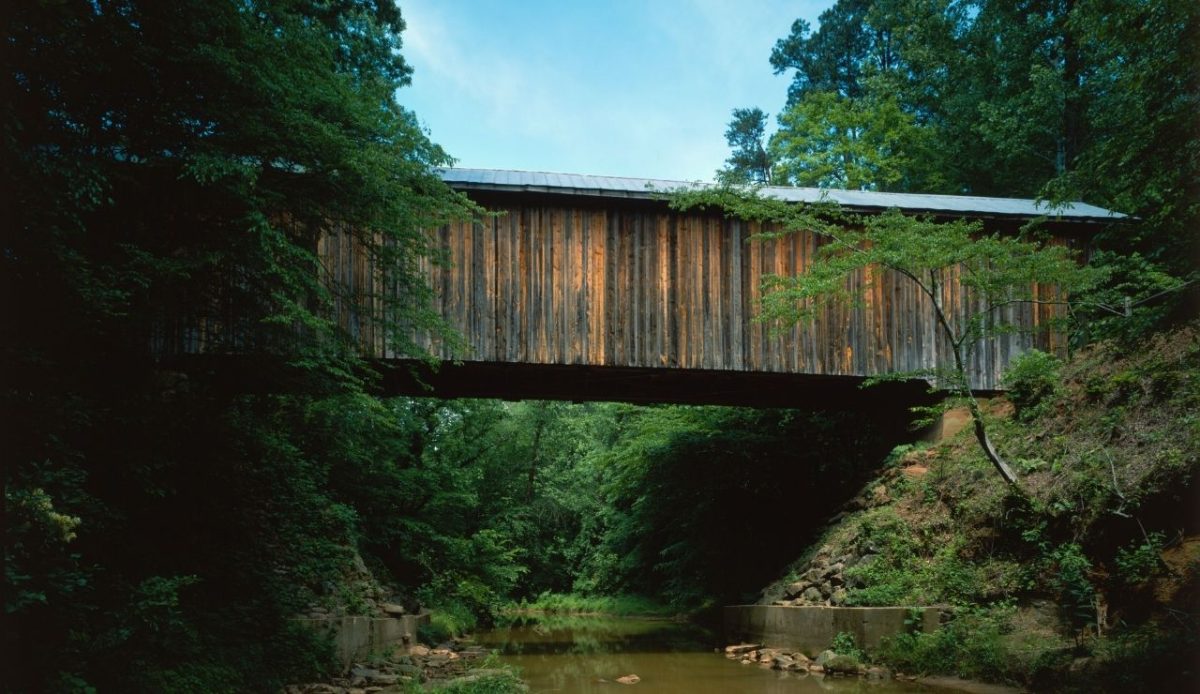
Built in 1895, this North Carolina bridge uses a unique truss system designed by Civil War general Herman Haupt and is the last surviving example in the world. Its fame grew after appearing in a novel and movie about love and loss on quiet rural roads. Stone piers rise from Sandy Creek to support the wooden frame, and the roof sheds water fast to protect the floor. Teens visit to see where scenes were filmed while parents read how crews saved it after floods tried to wash it away twice. Inside, the air feels cool, and slanted light cuts across the planks like stage beams. Carved initials from past travelers mark the walls, including names from the 1920s and 1940s. Even now, the wood creaks softly underfoot.
5. Union Village Covered Bridge, Barnet
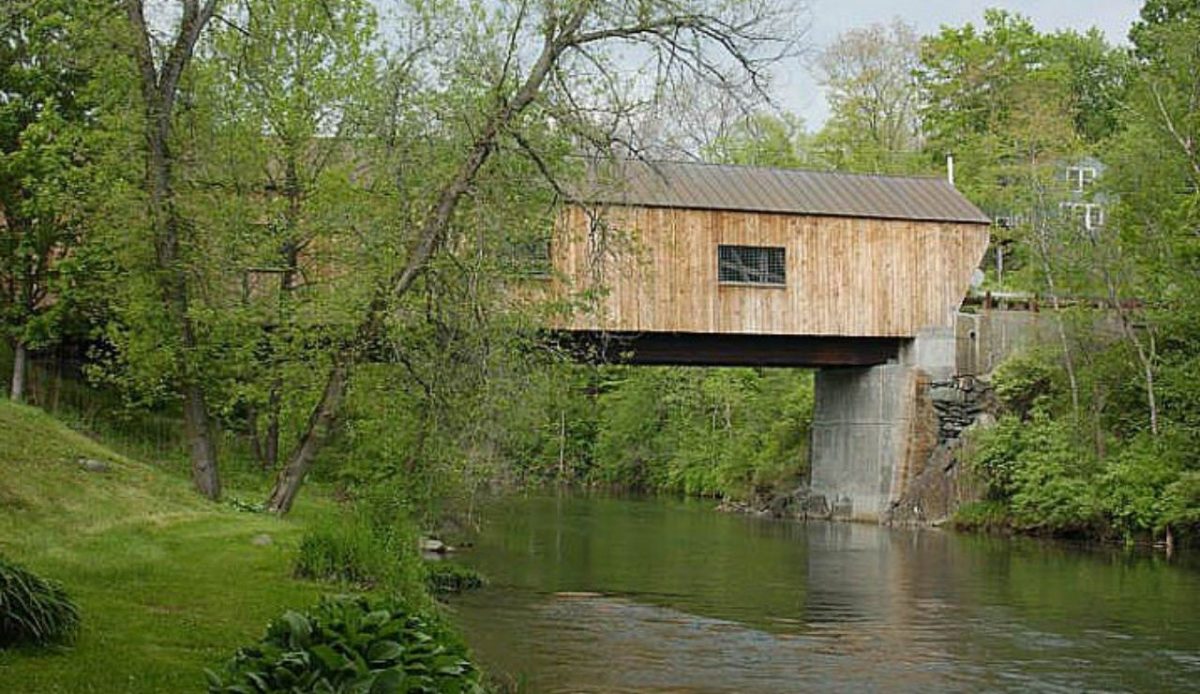
Spanning the Passumpsic River in northeastern Vermont, this 1870 bridge blends into a quiet valley where forests meet open fields. At 189 feet long, it uses a double Burr Arch truss and has been restored several times to keep it safe for light use. Snow piles on its roof in winter, and wildflowers bloom near its ends in June. Drivers slow down when they enter because the road narrows and the light changes fast. Kids love how their voices echo inside, and parents appreciate the lack of cell signal, which forces everyone to look up. Crews replace shingles every few years and paint it a deep red that matches other Vermont spans. It feels like a secret passage even though it sits on a public road.
6. Hyde Hall Covered Bridge, Springfield
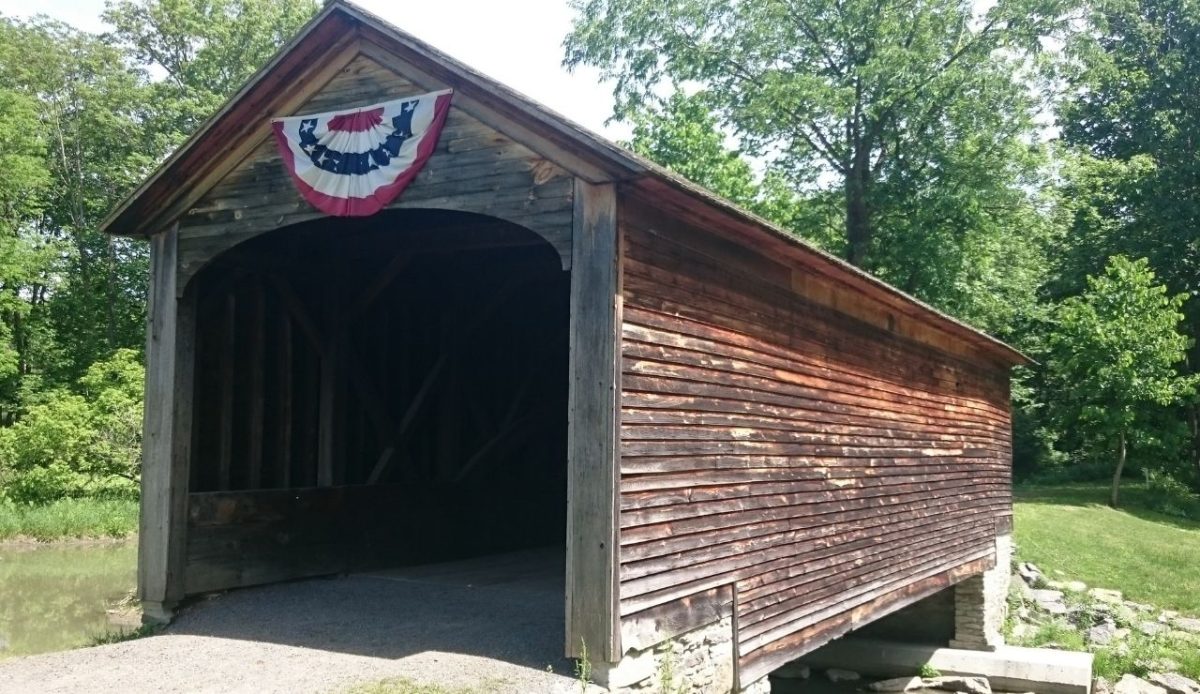
This small bridge in upstate New York dates to 1825 and may be the oldest standing covered bridge in the United States still in use today. It crosses a creek on private land near a historic estate and was never meant for heavy loads but instead served farm workers and guests moving between buildings. Built with hand-hewn white pine, its simple Queen post truss holds steady after nearly two centuries of use. No major floods threaten it here, and limited traffic means less wear on the planks and supports. Visitors walk through quietly, taking in the soft light and smell of old wood. A sign tells its story but standing under the roof gives you a deeper sense of how early builders worked with what nature provided. It proves that care and simplicity can beat time.
7. Portland Mills Covered Bridge, Rockville
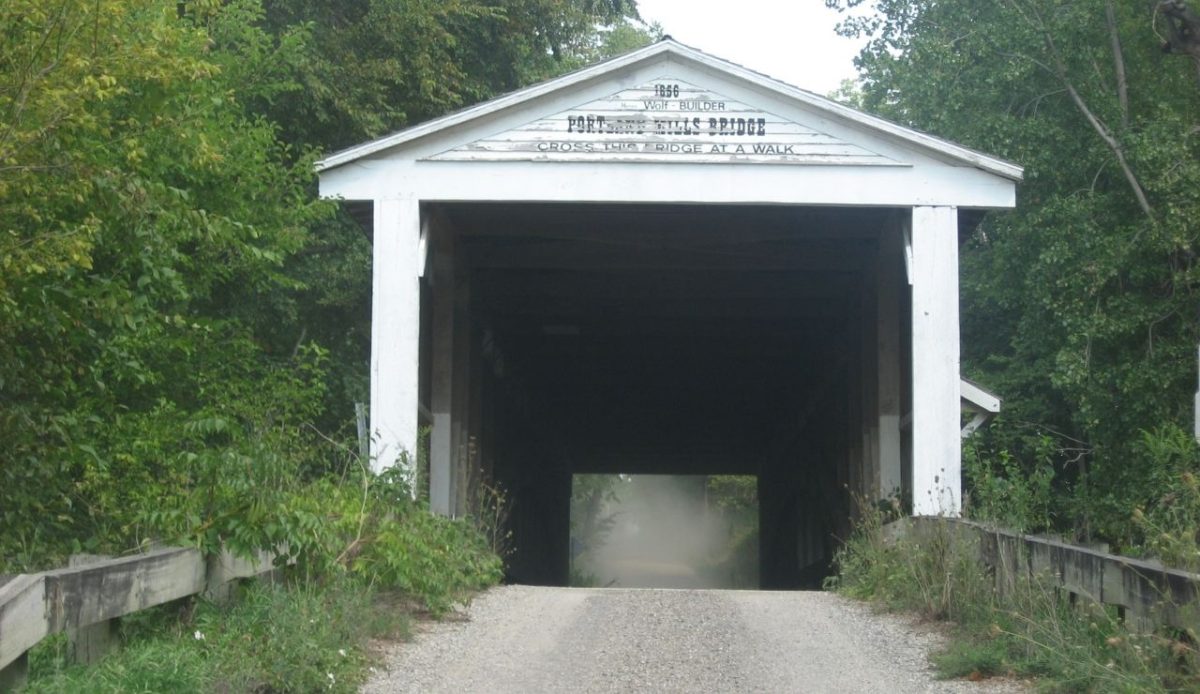
Built in 1856, this Indiana bridge once carried farmers to market and now rests in a park where families picnic and kids explore its shaded interior. Moved in 1961 to save it from flooding it stands as a symbol of how locals fight to protect their history. Its Burr Arch truss is strong enough to handle light vehicles, but weight limits keep trucks away. Thick oak beams join with wooden pegs, and the roof sheds rain fast to protect the deck. Carved initials from past travelers mark the walls, including names from the early 1900s. Teens visit to take photos while parents read about how storms and neglect almost took it twice. Crews repaint it every few years and check joints each spring. It does not just cross a stream—it connects people to a quieter America.
8. Humpback Covered Bridge, Covington
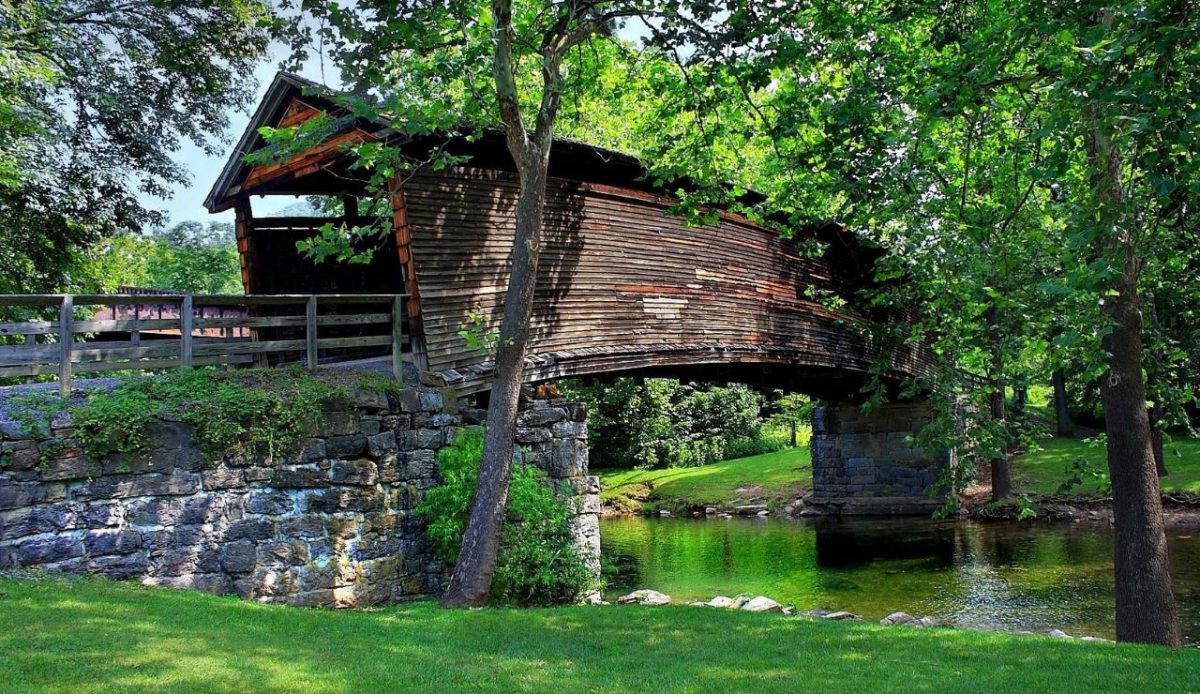
Rising in an arc over Dunlap Creek in Virginia, this 1857 bridge is the only surviving humpback covered bridge in the nation and stands out for its curved shape and stone arch foundation. The rise helped wagons clear high water and reduced pressure on the supports during floods. Heavy timber trusses run the length inside and the roof protects the frame from snow and rain. Drivers duck slightly when entering due to low clearance, and must go slowly on the narrow single lane. Surrounded by forest, it feels hidden from time and draws visitors who want to see something truly rare. Signs explain its history, but walking across gives you a better sense of how smart design solved real problems. It has survived fires, storms, and decades of neglect.
9. Smolen Gulf Covered Bridge, Ashtabula
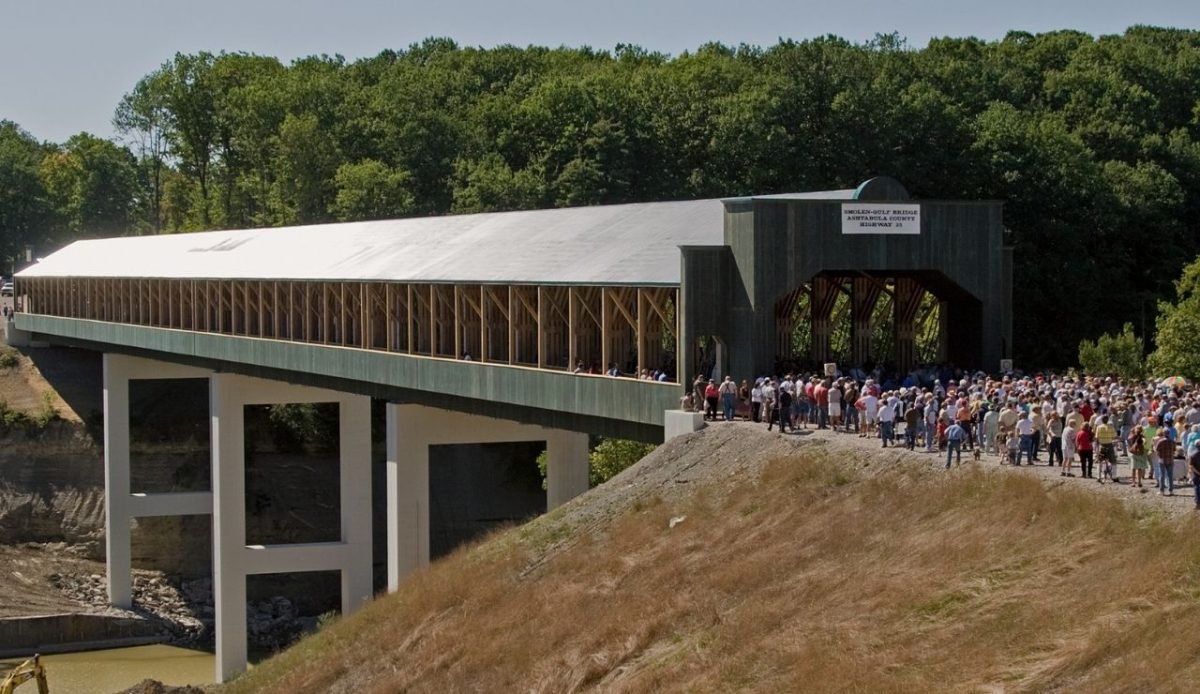
Completed in 2008, this Ohio bridge is the longest covered in the United States at 613 feet and honors the region’s deep tradition of timber span building. Though new, it follows 19th-century methods using hand-cut trusses and wooden pegs instead of metal fasteners. It spans the Ashtabula River on concrete foundations but looks like an old bridge from the outside with red siding and a gabled roof. Drivers slow down when they enter because the echo and dim light make it feel like a tunnel. Teens love the size and acoustics, while parents appreciate how it keeps history alive in a modern world. Crews inspect it yearly and keep the walkway clear for walkers and bikers. It shows that old ways can still work when built with care.
10. Stark Covered Bridge, Groveton
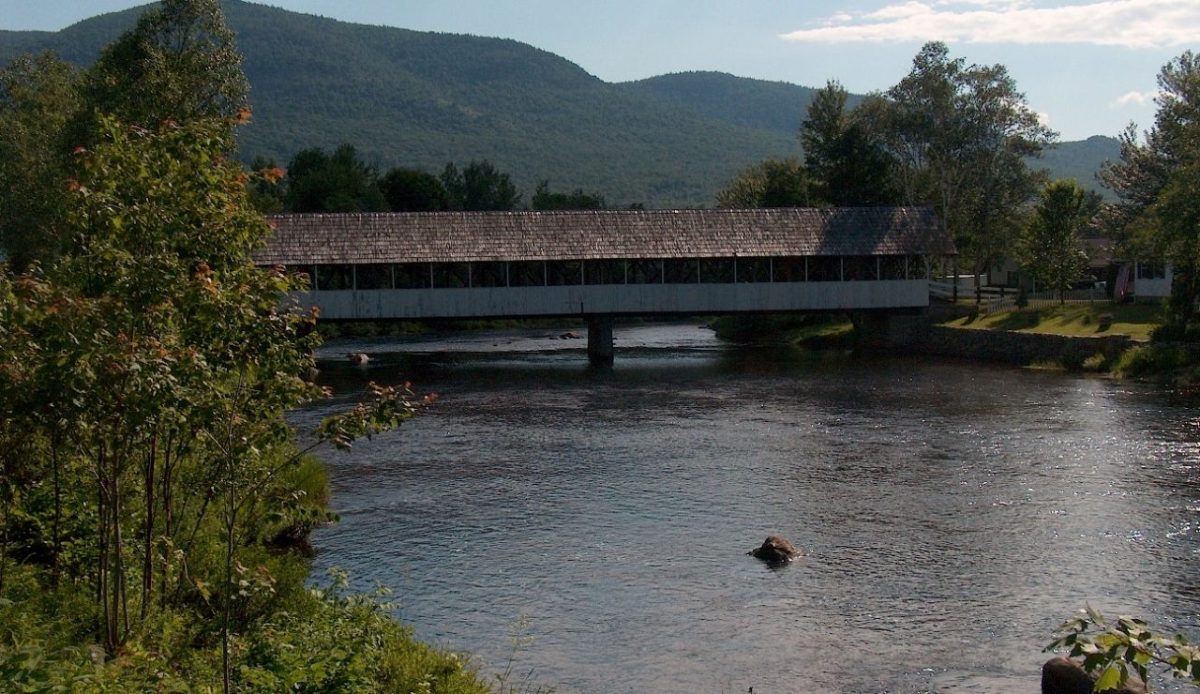
Located near the Connecticut River in northern New Hampshire, this 1862 bridge is considered the most photographed covered span in the state and sits beside a white church and green meadow that draw visitors year-round. Built with a queen post truss, it crosses the East Branch Ammonoosuc River on granite piers shaped by hand and set deep in the stream bed. Its red wood siding and gabled roof stand out against the trees and snow while narrow slits let light into the quiet interior. No modern signs clutter the scene, and weight limits keep traffic light. Teens come for pictures while parents sit on nearby rocks listening to water rush below. Crews repaint it every five years and check joints each spring. It feels less like a crossing and more like a place meant to be found slowly.
11. Sachs Covered Bridge, Gettysburg
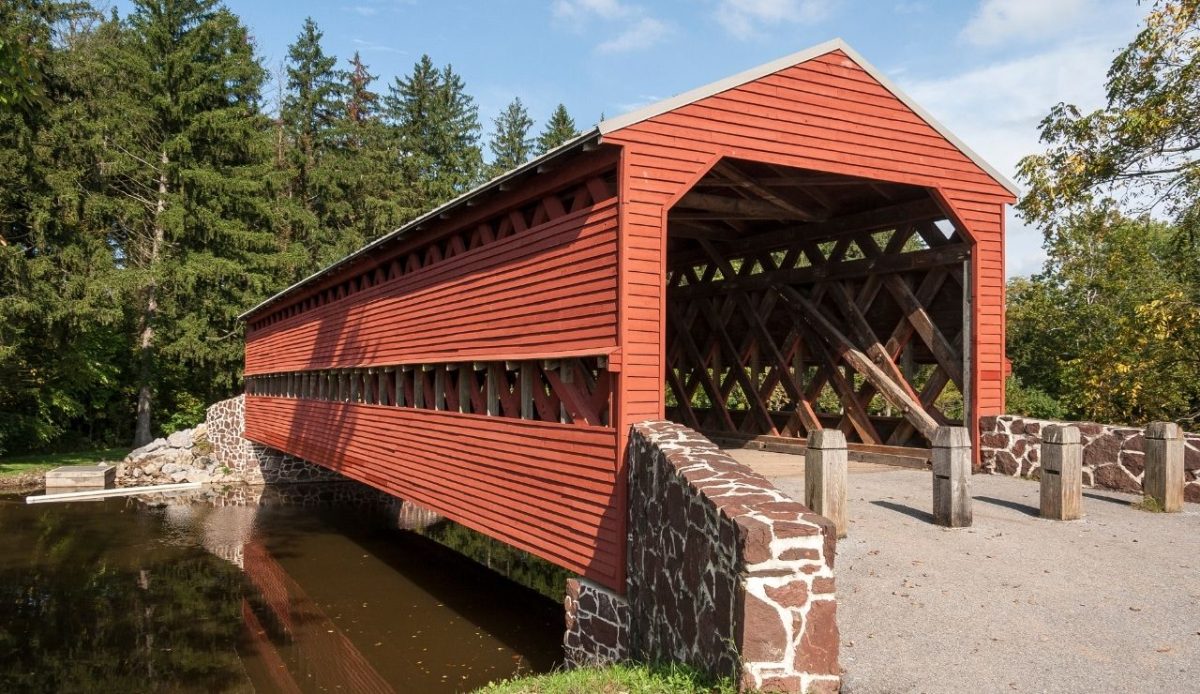
Crossing Marsh Creek in Pennsylvania, this 1854 bridge played a role in one of the most important battles in American history. Confederate troops used it during their retreat after the Battle of Gettysburg, and bullet marks were once visible in the wood. Its Burr Arch truss has held strong for over 160 years, and it still carries light traffic today. The red siding and gabled roof blend into the surrounding farmland, giving visitors a clear view of how war and daily life once shared the same roads. Parents often stop to explain the Civil War to their kids while teens snap photos of the long shadowed interior. Crews maintain it carefully and it remains one of the few bridges with direct ties to wartime movement. Walking across feels like touching a page from a history book.
12. Old Blenheim Bridge, Schoharie
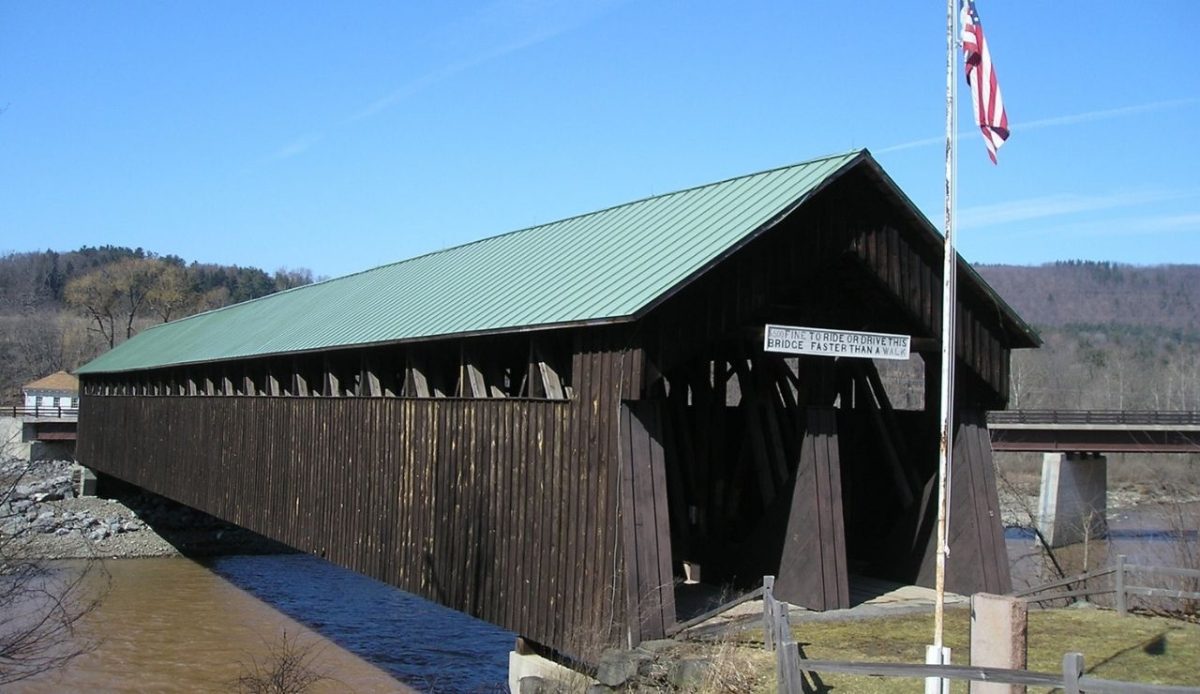
Once one of the longest single-span wooden covered bridges in the world, this New York landmark stood for 170 years before being lost to flooding in 2011. Built in 1855, it crossed Schoharie Creek using a Howe truss design with iron rods to tighten the frame. At 210 feet, it could carry wagons and later cars without failing. Its loss shocked preservation groups and showed how climate extremes threaten even well-maintained spans. Today, a replica is planned, and markers tell its story to visitors. Old photos show horse teams passing through and summer picnics on the banks. Though gone, its memory lives on as a reminder of what we stand to lose. For families driving past the site, it becomes a lesson in history’s fragility.
