
A scenic bar becomes memorable when the surroundings take priority over the glass in hand. People pause, scan the horizon, and forget the sentence they started. That reaction is what this piece tracks.
Each pick is a long-running venue with a clear identity and a view that guests routinely cite as the main draw. I avoided vague rooftops, seasonal setups, and spots where scenery is only a minor perk. Names were chosen for stable operations and consistent access.
The notes stay practical and verification-minded. You will see what the sightline includes, why it is distinctive, and which conditions tend to deliver the clearest look. Details focus on what is visible from the bar area itself, not from hotel rooms or dining tables.
1. Sky Bar at Lebua, Bangkok, Thailand
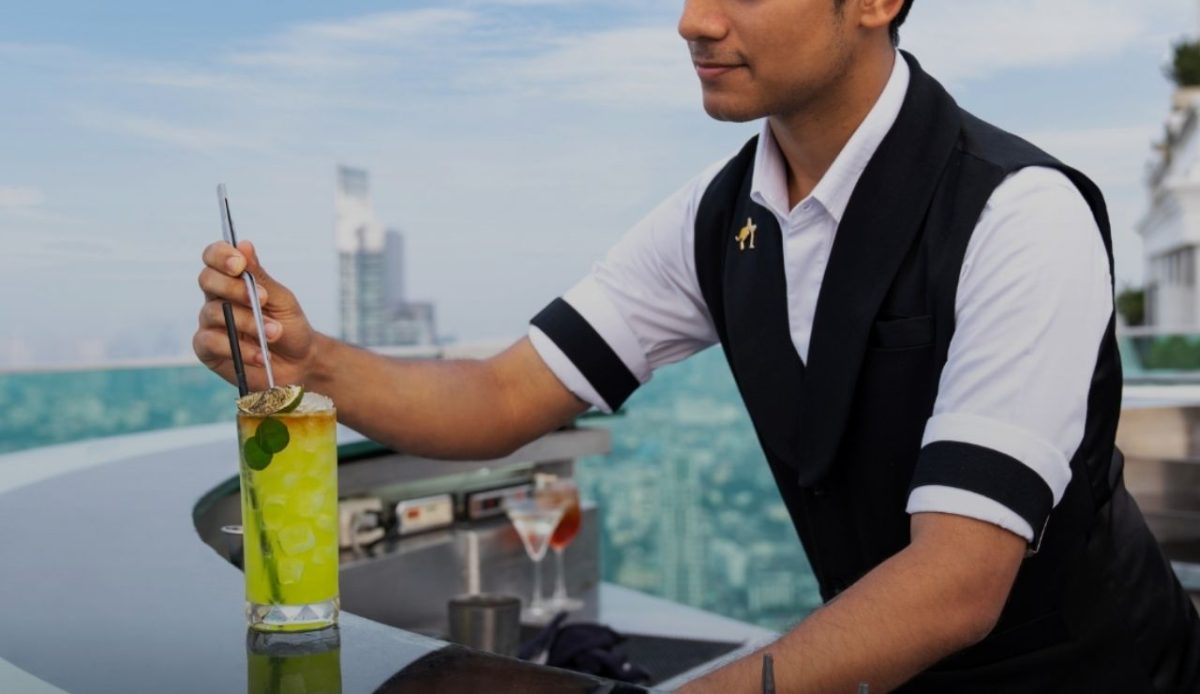
Sky Bar at Lebua is high above Bangkok on an open terrace where the Chao Phraya bends, and dense towers stay in view. With no walls, the skyline fills the frame, and street noise fades into background hum.
A smart casual dress code and controlled entry keep the deck orderly, which protects sightlines at peak times. Guests often face outward while ordering, then turn back only after a long scan across districts and river lights.
Plan around visibility. After sunset, bridges and road lines become easier to trace, with river reflections forming bright clusters. When humidity is low, the panorama holds attention long enough that conversations stop mid-thought.
2. OZONE at The Ritz-Carlton, Hong Kong, China
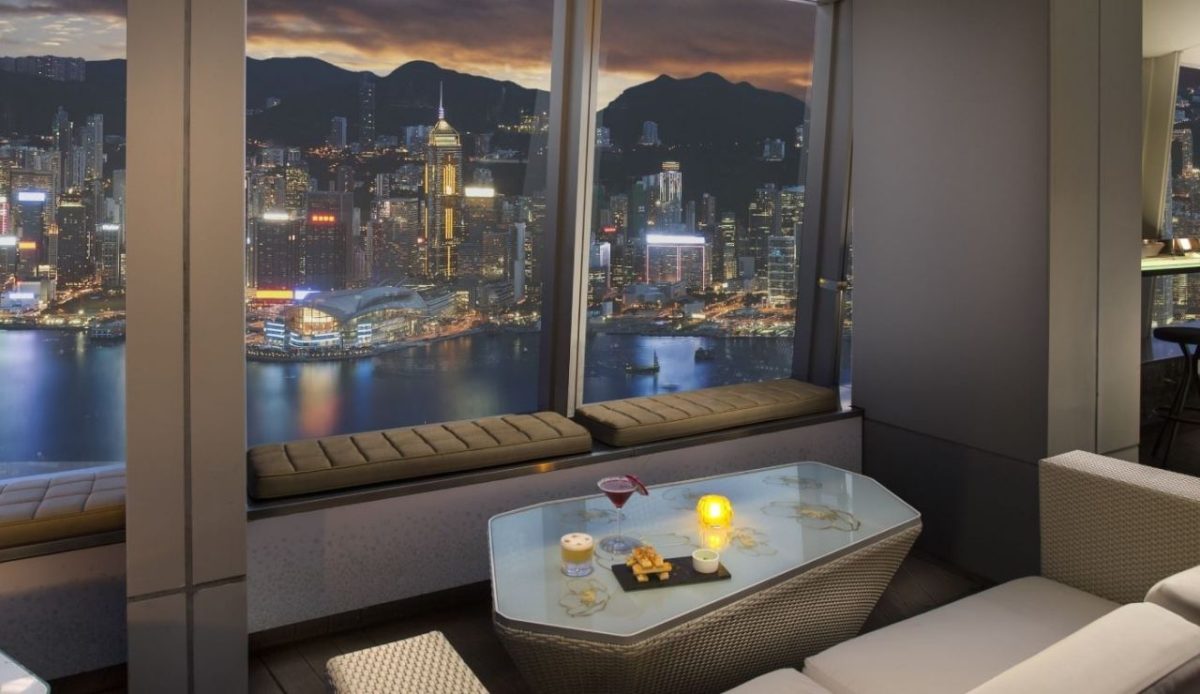
OZONE at The Ritz-Carlton Hong Kong looks across Victoria Harbour and the surrounding high-rise belt from extreme altitude. Ferry routes and shoreline curves become readable as light patterns, making the harbor a clear divider between districts.
Glass walls keep the panorama visible from most seats, including tables away from the windows. Interior lighting is kept low to reduce glare, and the layout avoids tall partitions that would block the view during service.
Weather shifts quickly, so a crisp night delivers the best detail. When harbor lights and hillside outlines are sharp, voices drop. Even with some haze, the sheer scale pulls attention outward and slows conversation.
3. Rock Bar at AYANA, Bali, Indonesia
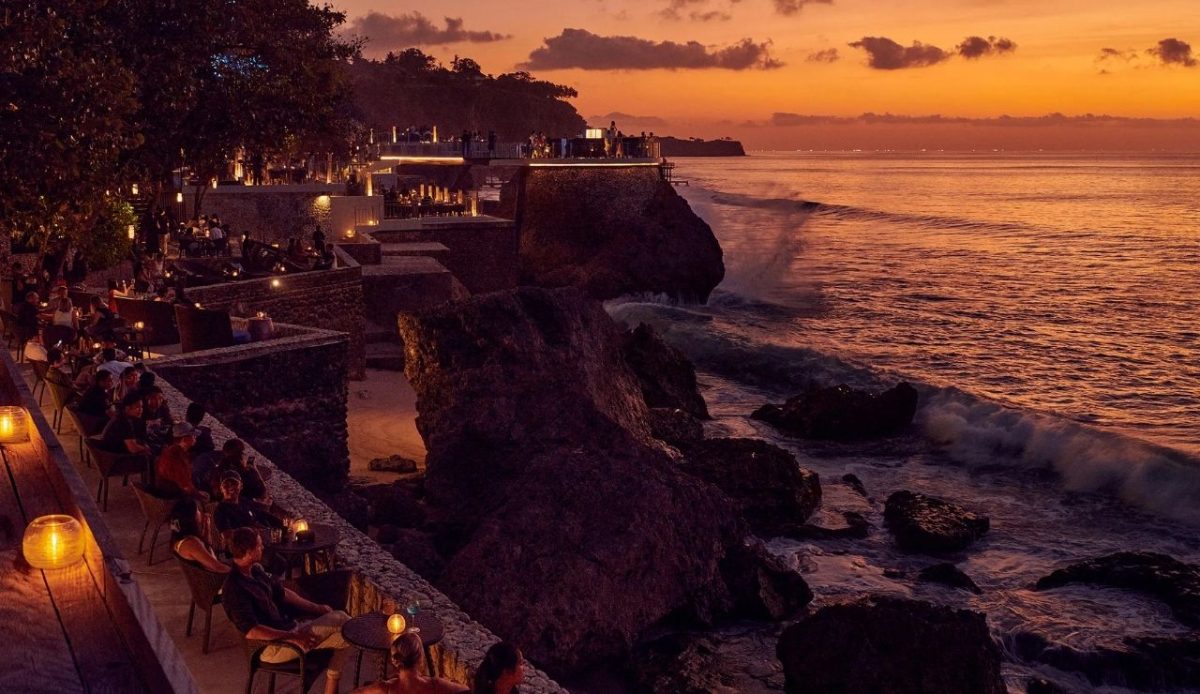
Rock Bar at AYANA Bali is anchored to a cliff above the Indian Ocean with a direct horizon line. Seating extends over the surf, so wave motion stays visible, and the ocean remains the main subject.
Arrival includes a descent that separates the bar from the resort level. Once on the platform, barriers are low, and wind and water sounds dominate, which changes how people move and reduces the urge to keep talking. Foot traffic is guided to avoid crowding.
Sunset is the key window because light shifts quickly across open water. Arrive early enough for a clear line, then stay as the color and reflection change. In calm weather, the horizon draws eyes and quiets groups.
4. CÉ LA VI SkyBar, Singapore
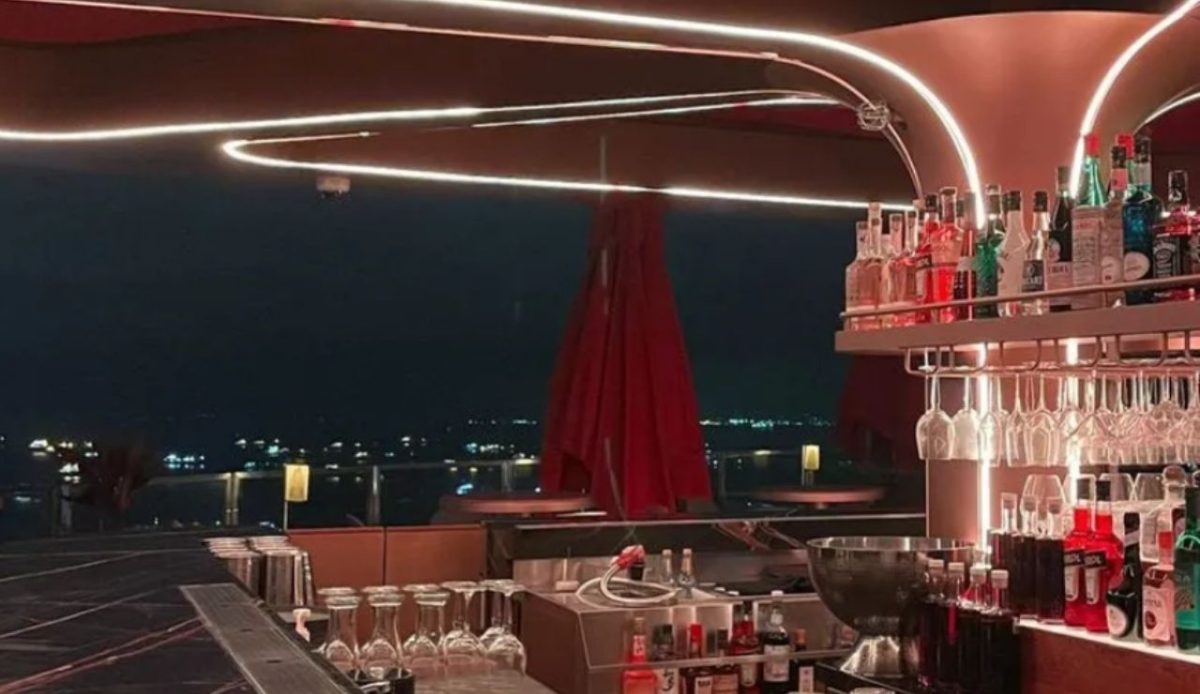
CÉ LA VI SkyBar in Singapore is atop Marina Bay Sands and faces the bayfront skyline and water below. Bridges, towers, and the marina curve stay in frame, so the view reads like a living map of the core city.
Standing areas and tables are angled toward the edge, keeping the skyline visible while ordering and sipping. Staff manage flow during peak periods, which helps prevent blocked sightlines even when the venue is crowded.
Choose a slot with lower haze for sharper detail. After dark, reflections across the bay and glass facades add depth and keep eyes moving. When the skyline is crisp, talk pauses as guests trace landmarks and light paths.
5. At.mosphere Lounge, Dubai, UAE
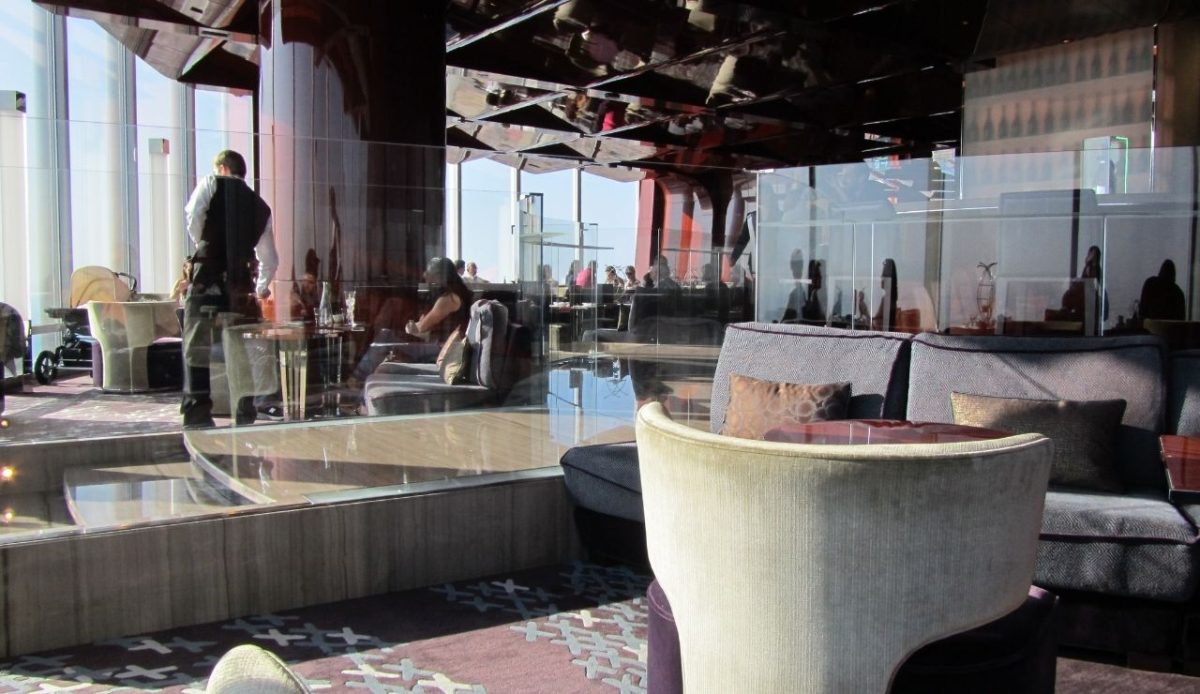
At.mosphere Lounge in Dubai is high within the Burj Khalifa, placing most of the city far below. Roads and block patterns become easier to read, and the desert edge can be seen beyond the developed core on clear days.
Large windows keep the exterior present from nearly every seat, and the room avoids sightline interference. Timed reservations and structured service reduce crowding near the glass, supporting a calmer viewing experience.
Visibility depends on dust and humidity. On a clear night, the grid of lights and distant horizon can be striking enough to quiet a table. When haze arrives, detail softens, yet the height still shifts attention outward.
6. Baba Nest, Phuket, Thailand
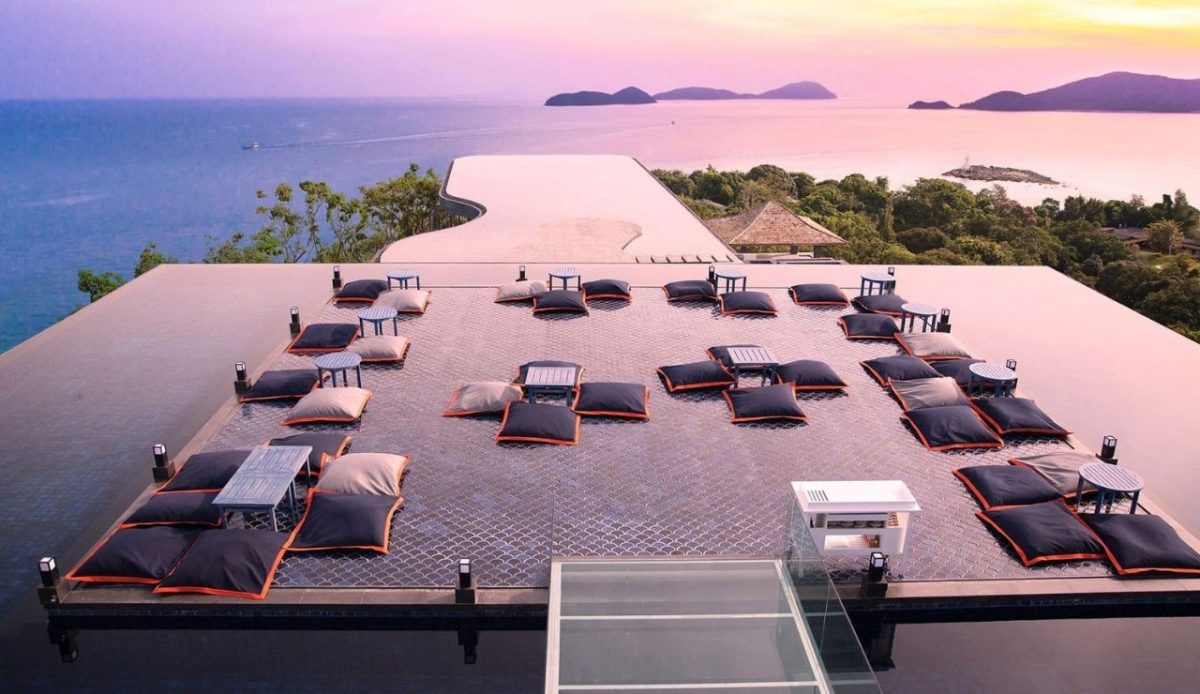
Baba Nest at Sri Panwa in Phuket is on a hilltop with open Andaman Sea views in several directions. The horizon is uninterrupted, and the waterline can be seen from many seats, which keeps attention on the distance.
Capacity limits reduce noise and protect sightlines. The deck encourages slow scanning rather than quick movement, and guests often linger with fewer words because wind and weather cues are felt directly. Service is paced, not rushed.
Late afternoon often balances light and comfort. With clear skies, distant islands and shipping routes can be spotted and shared quietly. As the sun drops, color changes across the water trigger long pauses and silence.
7. O Bar and Dining, Sydney, Australia
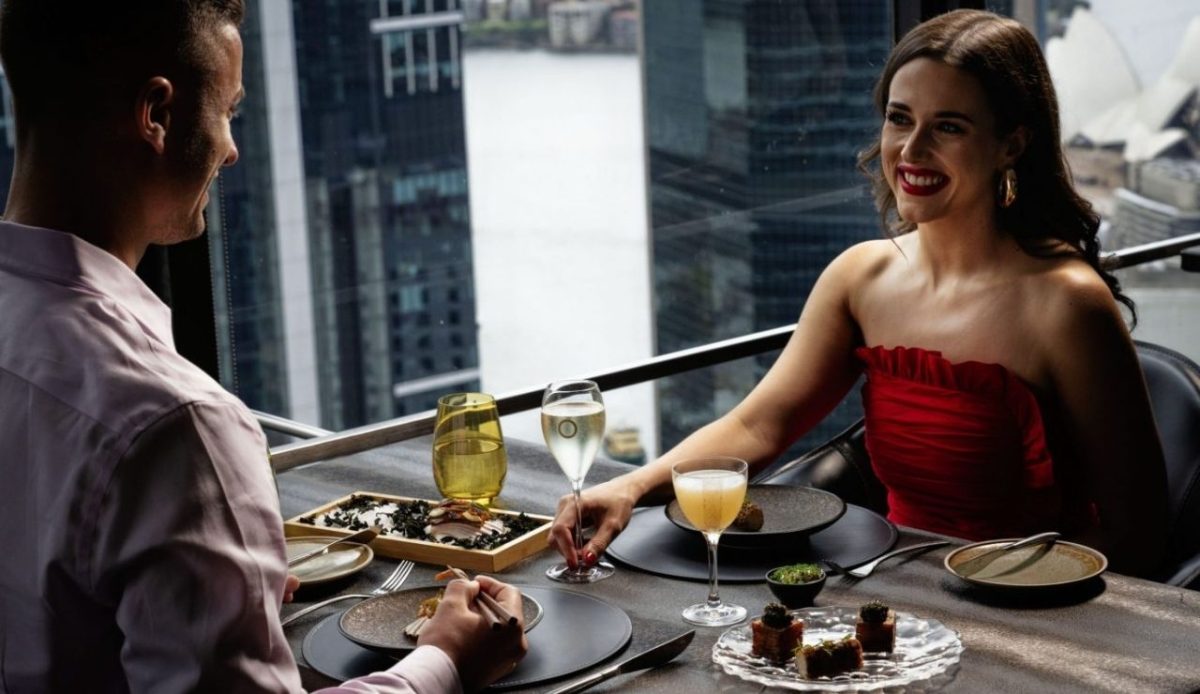
O Bar and Dining in Sydney rotates slowly, delivering a changing panorama without guests moving seats. Harbor water, downtown blocks, and distant suburbs rotate through the windows, making the view dynamic instead of fixed.
The motion is gradual, yet it resets attention repeatedly. People pause mid-sentence to relocate landmarks as the room turns. The effect is a series of small reveals rather than one dramatic moment at the entrance.
Stay long enough to experience much of the rotation. Daytime emphasizes shoreline detail, while evening highlights bridge lines and tower lights. Because the angle keeps changing, the conversation is interrupted again and again.
8. Top of the Mark, San Francisco, USA
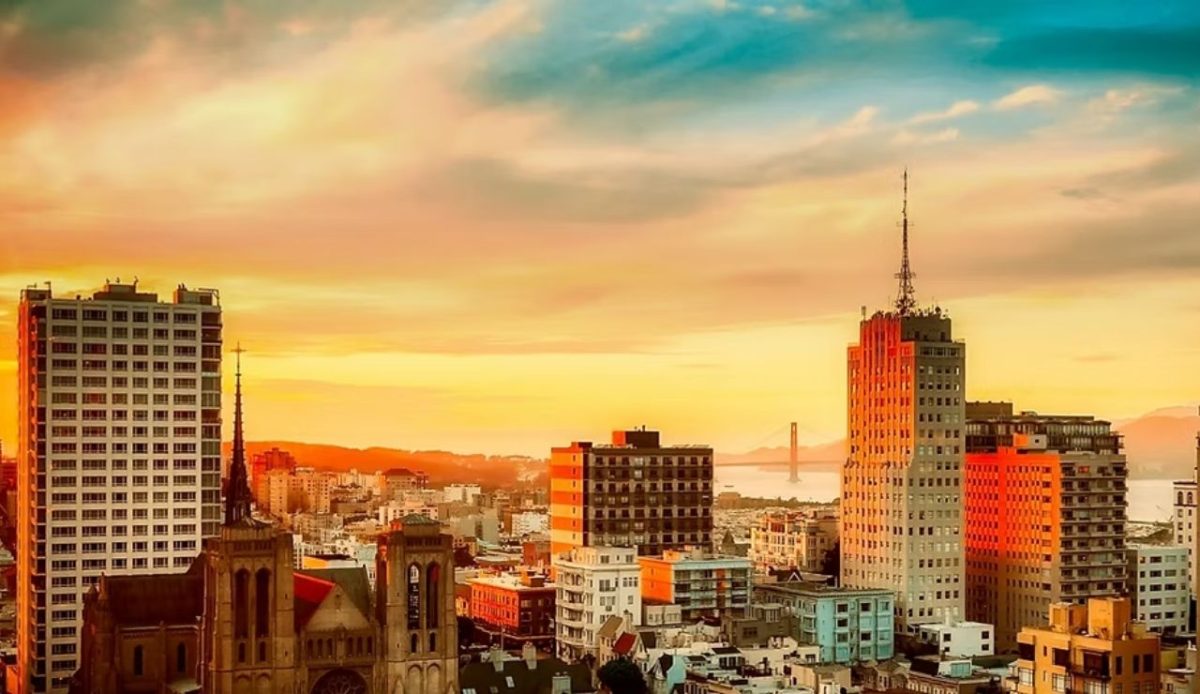
Top of the Mark in San Francisco frames the bay, key bridges, and nearby hills from a high-floor lounge. The city’s steep layout becomes clear from this vantage, and water routes can be followed by light patterns at night.
Fog can transform the scene within minutes. It may hide the shoreline, then open a clear channel, pulling eyes back to the windows repeatedly. The interior stays restrained, so the outside remains the main draw.
Choose a night with steadier conditions for the clearest panorama. When visibility is strong, bridge outlines and bay lights become easy to track, and voices are lower. Even locals pause when the fog lifts and the view returns.
9. The Silo Rooftop, Cape Town, South Africa
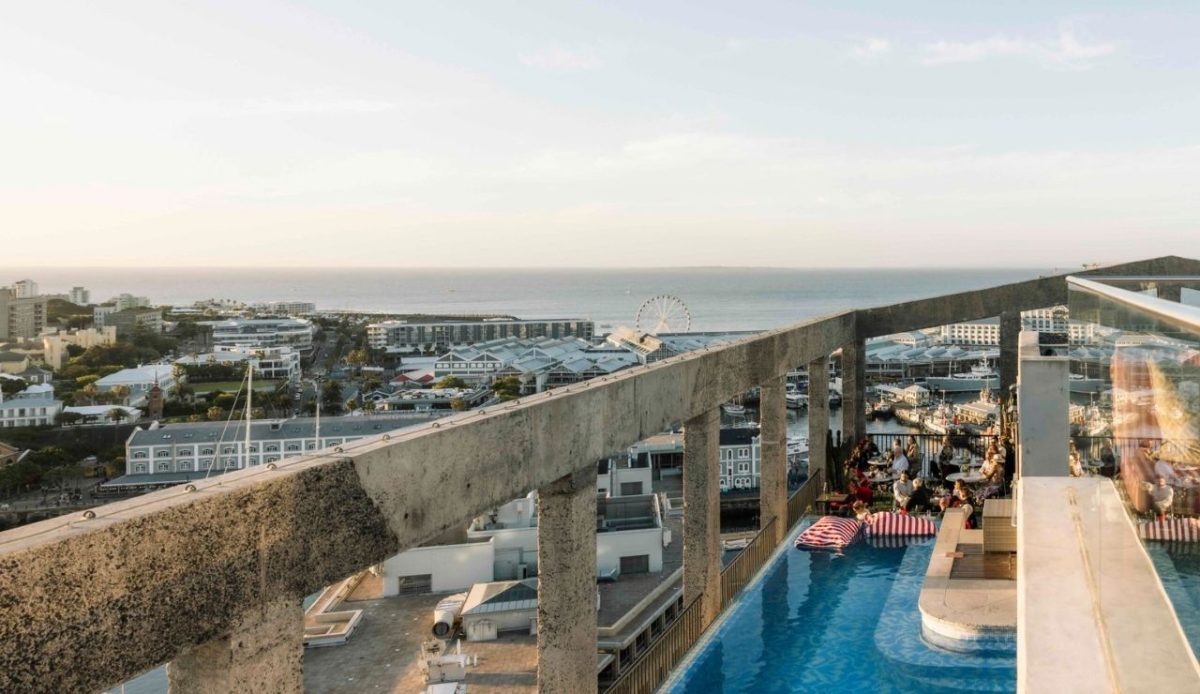
The Silo Rooftop in Cape Town overlooks the V and A Waterfront with Table Mountain as a dominant backdrop. Harbor activity provides motion, while the mountain anchors the scene with a recognizable profile that is easy to read.
Open edges preserve the panorama, and the space is compact enough that the mountain stays central from many positions. Guests often stand and reposition to compare angles and cloud cover, which creates repeated quiet moments.
Light shifts across the slope can be noticeable even on mild days. When clouds drift, shadows redraw the face of the peak and stop conversation. At dusk, waterfront lights add contrast that keeps attention moving outward.
10. Le Perchoir Ménilmontant, Paris, France
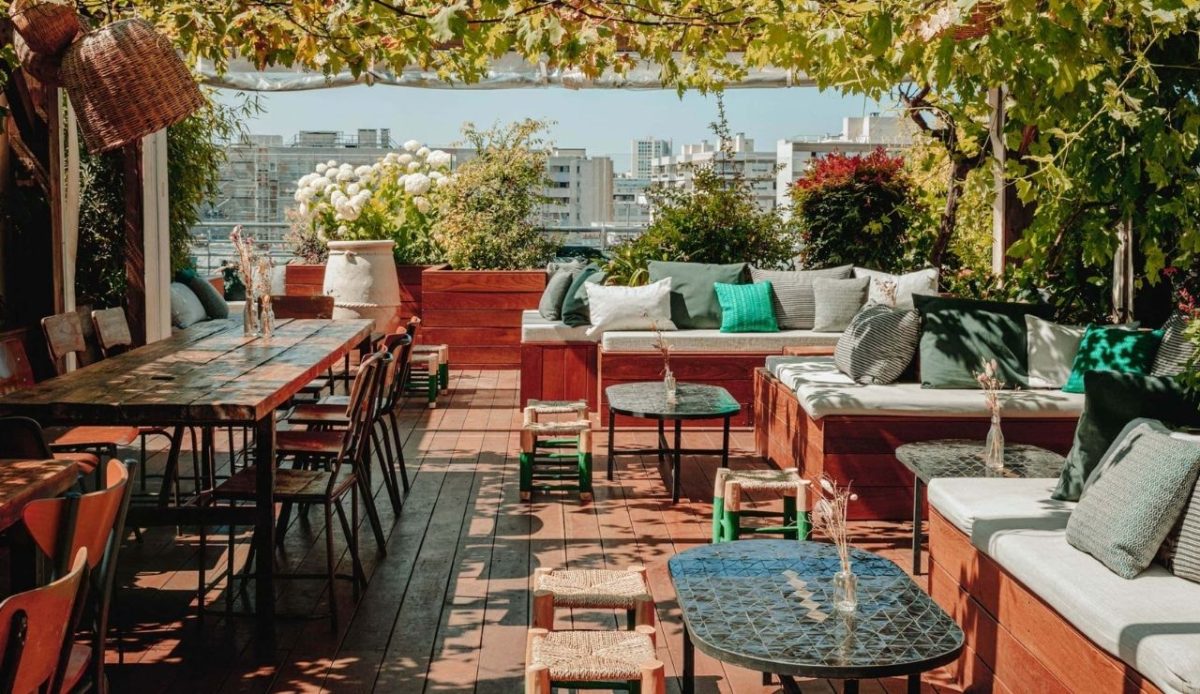
Le Perchoir Ménilmontant in Paris offers rooftop views across dense rooftops and distant landmarks. The height is moderate, but the city texture is detailed, with varied rooflines that create depth across the horizon.
The terrace layout keeps many guests near the edge, and seating encourages outward attention. Even when busy, people orient toward the skyline rather than the bar interior. The view supports slow observation because small details appear over time.
Pick a clear evening for sharper outlines of distant monuments and taller districts. As lights spread across the city, the skyline becomes simpler to read, so voices often drop. The transition to night produces repeated pauses.
11. 6th Floor 360 Panorama Roof, Istanbul, Turkey
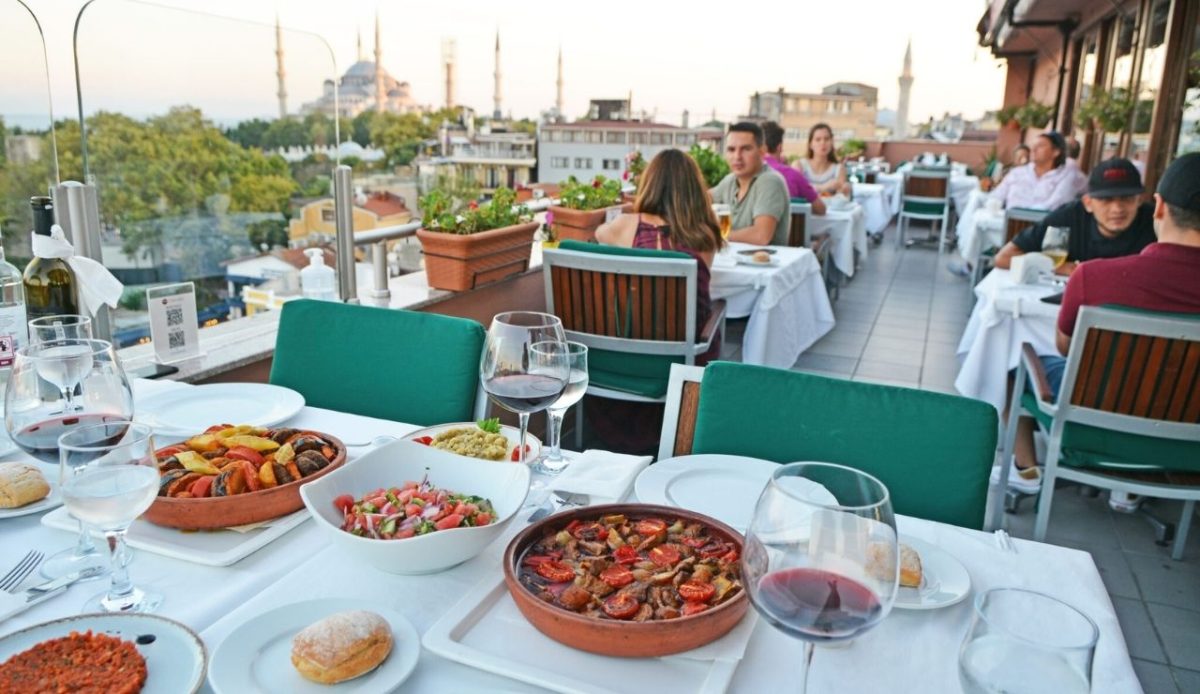
6th Floor 360 Panorama Roof in Istanbul is near Sultanahmet with close views of domes and minarets that define the historic core. Because the landmarks are nearby, details remain readable, and the scene feels immediate.
Open sightlines allow scanning in multiple directions, so guests naturally turn and point before ordering. The proximity of major sites creates shared recognition that pulls attention outward quickly, even for short visits.
Evening lighting sharpens outlines and increases contrast. Choose a time with good visibility since haze reduces fine detail. When the monuments stand out clearly, the tables are quite fast because the view becomes the center of attention.
12. Panorama Room, New York City, USA
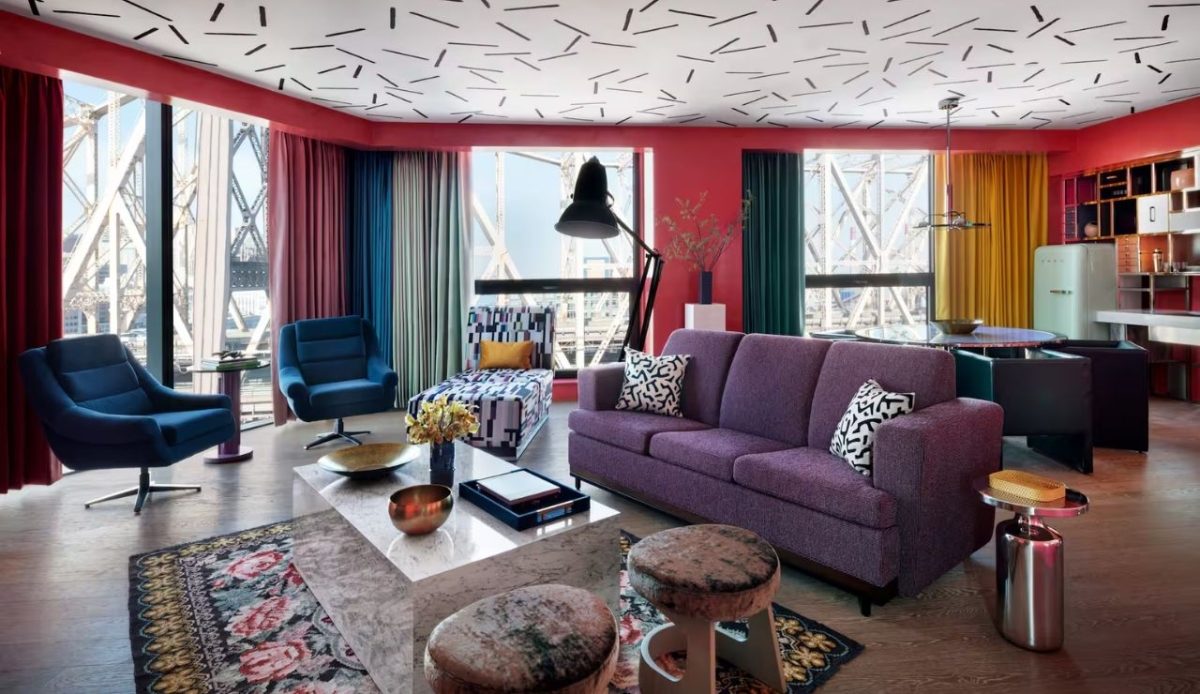
Panorama Room in New York City on Roosevelt Island offers a broad angle on several boroughs with rivers and bridges in the foreground. Water lanes cut through the skyline, so the framing feels distinct from Midtown rooftops.
Floor-to-ceiling glass gives the skyline dominance, while the interior remains refined and uncluttered. Seating still preserves strong outward lines, and guests often track bridge traffic and reflection patterns across the river.
A clear night provides the strongest contrast across the water. When cables, tower tops, and reflections align, conversation slows as people study the geometry. In less clear weather, the outline softens, but the layered view still distracts.
13. The Ides at Wythe Hotel, Brooklyn, USA
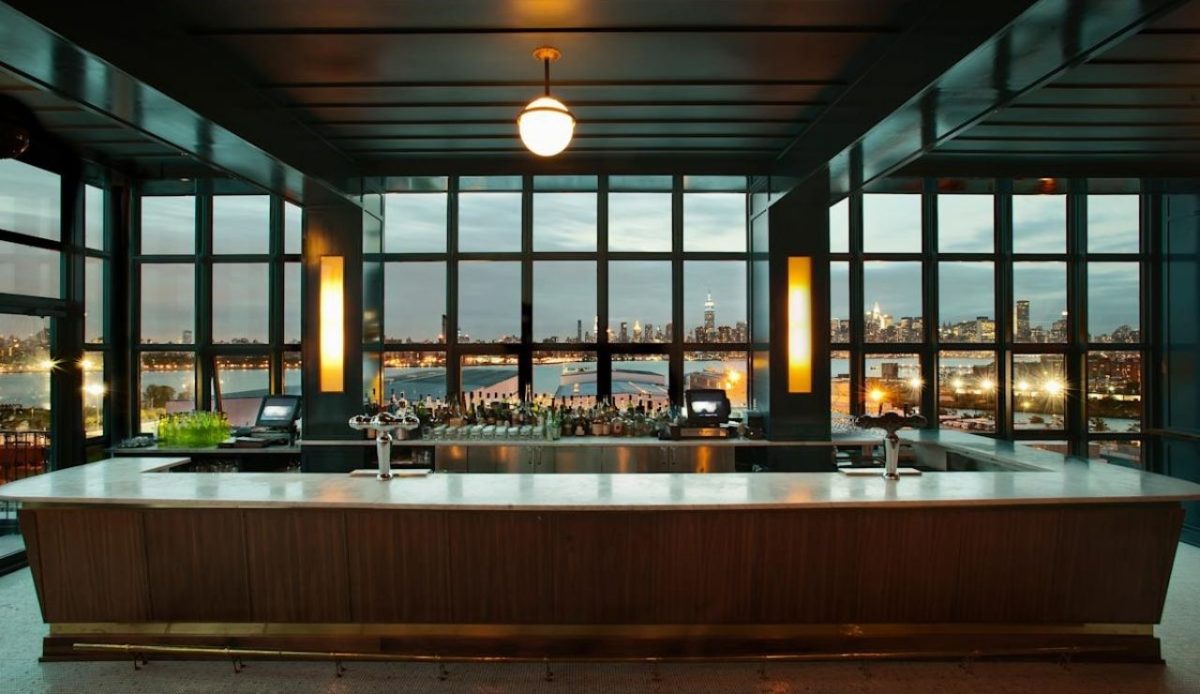
The Ides at the Wythe Hotel in Brooklyn faces Manhattan across the East River, giving a clean skyline outline with water in front. Distance separates buildings so individual shapes stand out, and the river adds depth and motion.
Because the terrace is the main draw, guests gravitate to rail positions and keep the skyline in sight. The layout promotes shared viewing, with people comparing which towers appear from each angle, even on busy evenings.
Arrive near late afternoon for a stronger definition of the buildings. As city lights turn on, outlines sharpen as river reflections add detail. That change often interrupts talk because attention shifts outward as districts brighten.
14. Cindy’s Rooftop, Chicago, USA
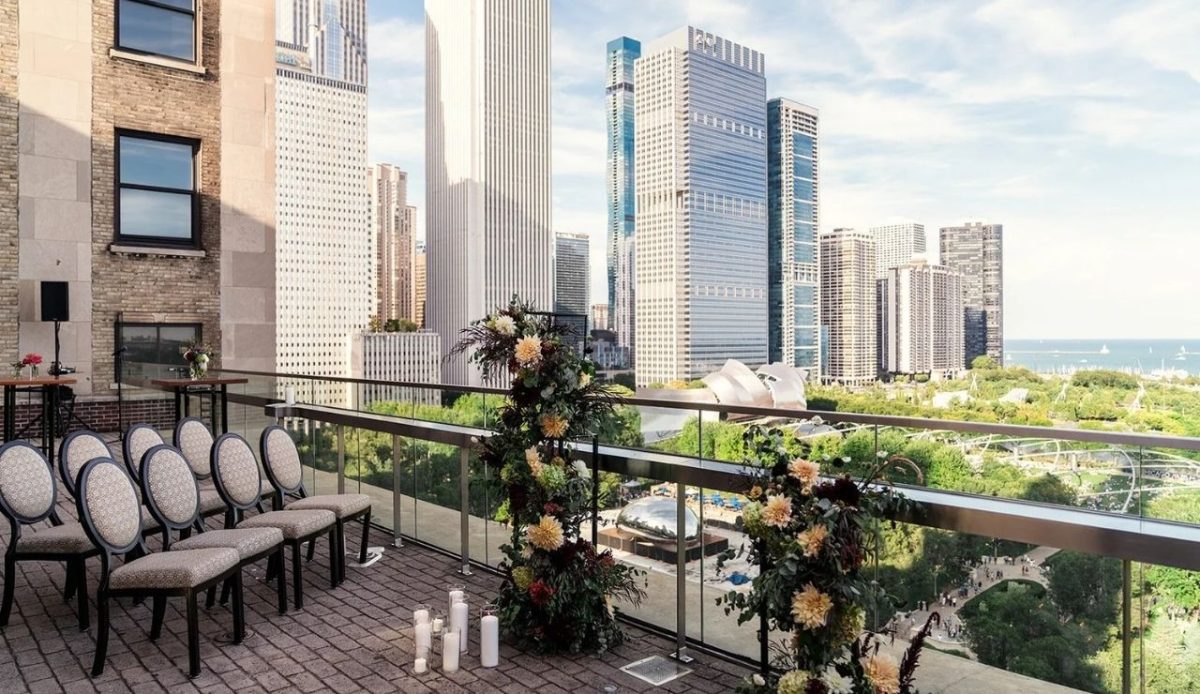
Cindy’s Rooftop in Chicago overlooks Millennium Park and Lake Michigan, pairing planned green space with a wide water horizon. The contrast between the city grid and shoreline is immediate, and the park layout can be traced from above.
Big windows keep this outlook accessible in colder months, and seating makes it easy to face the park and lake rather than the room interior. The setting is also practical for visitors since major points of interest remain visible.
Lake weather changes quickly, so clouds and light can redraw the scene in minutes. When conditions shift, heads turn toward the windows and conversations pause. On clear evenings, park lights and open water hold focus for long stretches.
15. Sky Garden Bars, London, UK
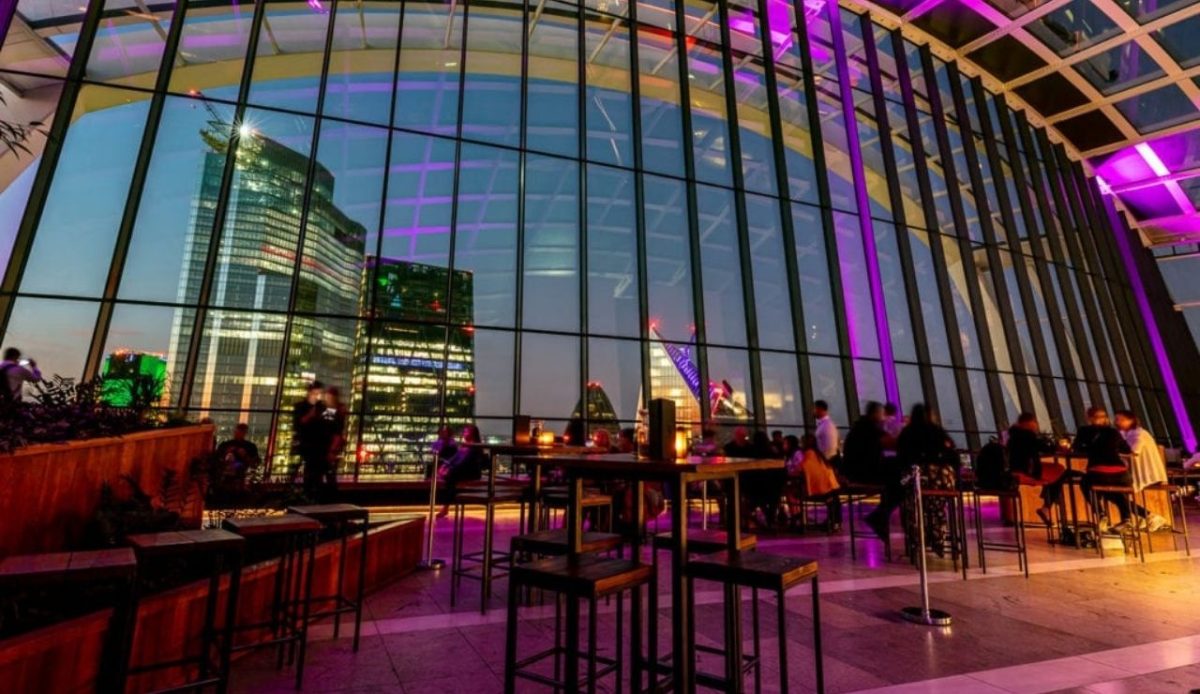
Within the Sky Garden, several bars share a high indoor garden setting with city views. The outlook includes the Thames and central landmarks through broad glass panels, with greenery inside that does not block the skyline.
Because the space is partly enclosed, conditions feel steadier than most rooftops, yet the city remains dominant. Guests often drift to the windows even after finding seats, then return with their attention still outside.
Book a time with good visibility for clearer detail across the river. At night, tower lights outline routes and landmarks, which can quiet a room of chatter. The view remains consistent because the glass framing stays wide and unobstructed.
