
Jaywalking in the United States was long treated as a routine pedestrian offense, enforced through fines and street stops, even when no safety gain was shown in crash data.
Since 2021, reforms in several jurisdictions have changed the legal rule, not just the mood of enforcement. Some places repealed the local ban after council votes. Others ended tickets and barred pretext stops for crossing outside a crosswalk.
Each city below is included only if a documented change applied there, either a municipal repeal or a state statute that controls local enforcement. Effective dates and the remaining duty of due care are noted so the scope stays precise.
1. New York City, New York

New York City enacted Local Law 98 in October 2024, amending section 19 195 so a pedestrian may cross a roadway at any location. Crossing against a pedestrian signal was also removed as a city code violation.
In 2025, the DOT adopted conforming traffic rules, so summonses based on the prior jaywalking rule are not issued. The law also states that midblock crossing does not give pedestrians priority over vehicles. No permit is involved.
The result is a clean legal change, not a softer policy. Midblock movement is permitted, while reckless entry into moving lanes can still be handled through general safety and obstruction provisions when danger is created.
2. Kansas City, Missouri

In May 2021, the Kansas City Council voted 10 to 0 to delete the city’s jaywalking ordinance. That action ended tickets and fines for crossing a street between intersections under municipal law.
The repeal was framed as a policing and equity issue because minor pedestrian citations often created unnecessary officer contact. Supporters also argued that injury reduction depends more on speed control and yielding behavior than on punishing walkers.
With the ordinance gone, a normal midblock crossing is not a city offense. Unsafe conduct can still be addressed through other traffic or public safety rules when someone enters the roadway, so that an immediate risk is created.
3. Anchorage, Alaska

Anchorage Assembly adopted changes in August 2023 that took effect in October 2023 as part of the Anchorage Stop package. It legalized safe road crossings when no crosswalk or pedestrian tunnel is within 150 feet.
Fees tied to jaywalking citations were removed at the same time. The rule was designed for long blocks and limited marked crossings. In 2025, an ordinance proposal to restore a $40 fine was postponed, so the 2023 standard remained.
This is not a blanket permission near a marked crossing. Yet on many corridors, the act of crossing midblock became lawful if it is direct and performed with reasonable care for approaching traffic at any hour.
4. Denver, Colorado

Denver City Council approved a bill in January 2023 that decriminalized jaywalking under the city code. The change aligned Denver rules with state standards and directed police to treat pedestrian crossing enforcement as a low priority.
The measure was backed by evidence of racial disparity in citations and by the view that crash prevention depends more on driver conduct. The legal effect was that routine crossing between marked points no longer triggers a city ticket.
Even after decriminalization, pedestrians still must use reasonable care and obey signals when a crossing creates danger. The shift matters because the old location-based citation tool was removed from the city toolkit.
5. Arlington, Virginia

Virginia revised pedestrian enforcement starting March 1, 2021, so crossing midblock is no longer ticketable and cannot serve as the sole basis for a stop. Arlington, governed by state traffic law, is covered by that statewide change.
The reform was paired with limits on pretext policing and was described as decriminalization rather than permission to take risks. Pedestrians still must yield when vehicles have traffic priority at that moment.
In Arlington, the result is that a person is not fined simply for crossing between intersections. Civil liability after a crash can still turn on whether the crossing was done with due care in real conditions.
6. Alexandria, Virginia

Alexandria falls under Virginia’s 2021 statute that ended jaywalking penalties and barred police from stopping a pedestrian only because of the crossing location. The rule applies across the Commonwealth, including independent cities.
Supporters argued that the old ban drove selective enforcement and did not match how people move near transit stations and short retail blocks. The new framework shifted attention to actions that create real collision danger.
In Alexandria, an ordinary crossing between corners is not an infraction by itself. Enforcement would need some other basis, such as ignoring a signal in a way that produces an immediate hazard.
7. Richmond, Virginia

Richmond is governed by the same Virginia rule that took effect on March 1, 2021, ending tickets for jaywalking and blocking pedestrian stops that rely only on where someone crossed. Crossing midblock no longer counts as a standalone offense.
The goal was to reduce low-level encounters while keeping safety duties in place. Drivers must watch for pedestrians, but walkers must also yield when traffic has legal priority at a crossing point.
For Richmond residents, the change is direct. Midblock crossing carries no fine. If someone darts into traffic or disrupts flow, other laws can still be applied because the hazard, not the crossing spot, is being regulated.
8. Norfolk, Virginia

In Norfolk, Virginia’s 2021 decriminalization ended jaywalking tickets and removed the ability to stop a pedestrian solely for crossing midblock. The change is statewide and applies across local street designs, including multilane arterials.
It was linked to broader policing reform and traffic safety goals. The duty to act prudently remains, and pedestrians do not gain automatic priority when they cross outside painted lines.
Norfolk fits the topic in a legal sense. People are not cited just for where they crossed. Action can still be taken when behavior creates immediate danger, such as stepping into fast traffic without a safe gap, even today.
9. Virginia Beach, Virginia
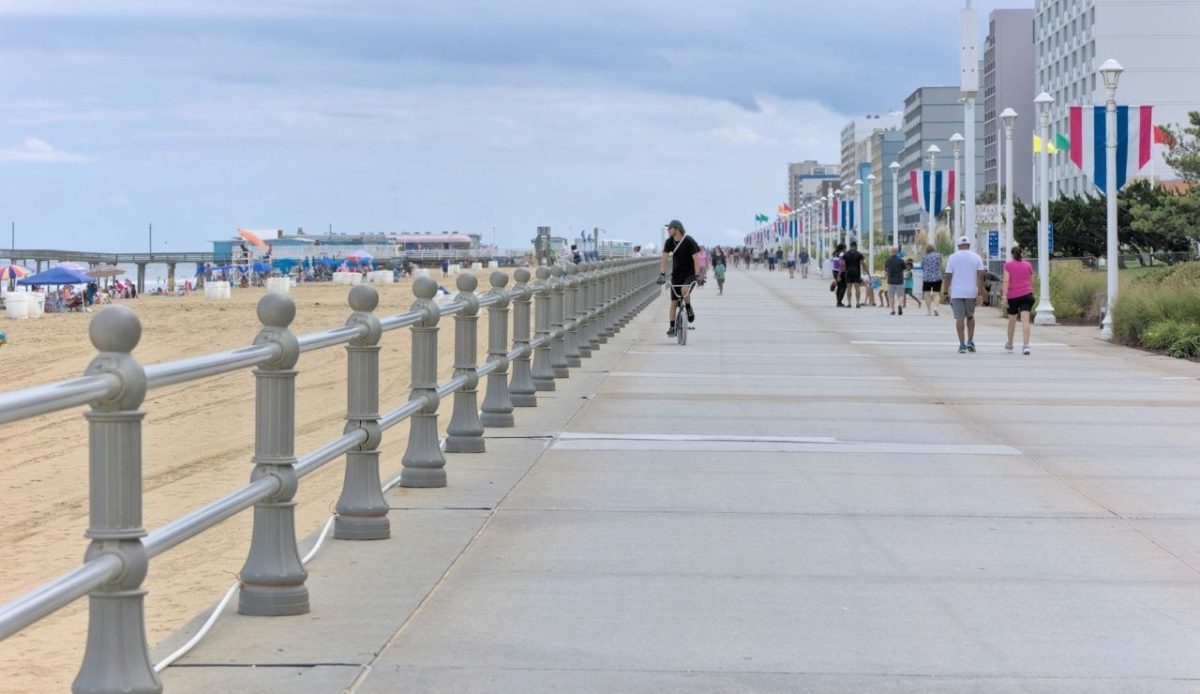
Virginia Beach is covered by the March 2021 reform that removed fines for jaywalking and ended pedestrian stops that hinge only on crossing location. As a result, crossing midblock carries no ticket by itself in the city.
Lawmakers described the prior rule as a tool for discretionary enforcement and argued that safety resources should target speed, impairment, and failure to yield. The legal change narrowed when police action is allowed.
In Virginia Beach, safe crossing remains expected, but the penalty for a simple midblock crossing is gone. If a crash occurs, fault may still be assessed based on due care rather than on a jaywalking ticket.
10. Chesapeake, Virginia
Chesapeake follows the same Commonwealth statute that decriminalized jaywalking as of 3/1/2021. Pedestrians are not meant to be stopped or fined merely for crossing midblock, even where blocks are long and crossings are spaced out.
The reform did not erase pedestrian duties. Signals still matter, and a person crossing beyond the crosswalk markings must yield to vehicles that have priority. The law changed enforcement, not road safety realities.
For Chesapeake, jaywalking is treated as lawful in the ordinary sense. Police action must be tied to a safety threat or another violation, which keeps attention on preventing collisions rather than policing walking patterns.
