
The smallest airport sign can save you from the longest walk, the wrong line, or a missed cutoff.
Airports are designed to move crowds quickly, which is exactly why the most useful signs are easy to blur past. Travelers often focus on gate numbers and boarding times, then miss the small clues that tell them where to stand, when to move, and which shortcut is actually meant for them.
The Wrong Terminal

The terminal sign matters before almost anything else. Many large airports split airlines, international flights, domestic departures, and partner carriers across separate buildings. A traveler who follows only a rideshare drop-off pin or an old confirmation email can end up in the wrong place with security, bag drop, and gates all out of reach.
This is especially painful for families, travelers with mobility needs, and anyone checking luggage. Terminal transfers can involve buses, trains, elevators, and a second round of walking. Before joining any line, match three things: the airline name, the flight number, and the terminal letter or number shown on the airport signs.
- Check next: departure board, airline app, and overhead terminal arrows.
- Do not assume a codeshare flight leaves from the airline you booked through.
Bag Drop Cutoff
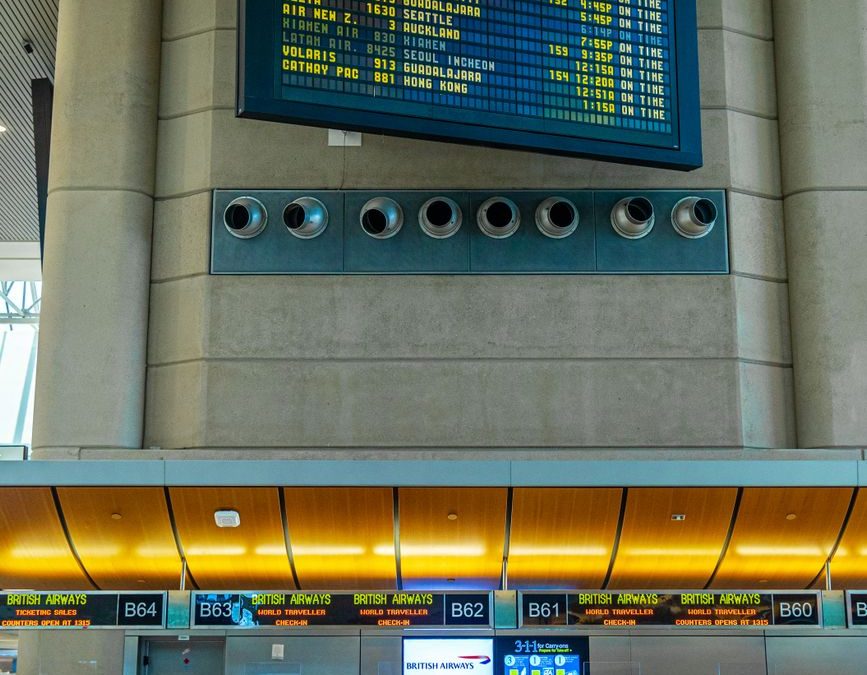
Bag drop signs are easy to ignore because they look routine. The problem is that checked luggage often has a cutoff time that is earlier than boarding. Some airports and airlines stop accepting bags a set number of minutes before departure, and that rule can feel harsh when the counter is still visible and the plane has not left.
This sign affects travelers who arrive close to departure, people connecting from trains or rideshares, and anyone carrying oversized items. If the cutoff passes, the traveler may be forced to rebook, fly without the bag if allowed, or miss the flight entirely. Look for posted times near self-tag kiosks, staffed counters, and luggage belts before settling into a long queue.
- Check next: whether your bag needs self-tagging before the counter.
- Watch for separate signs for oversized bags, sports gear, and international flights.
Security Wait Time
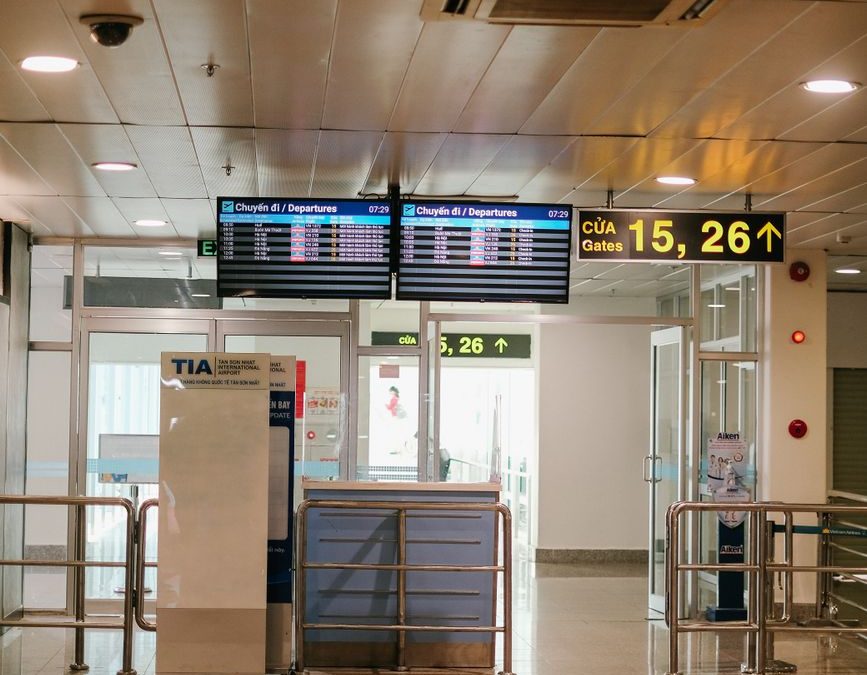
A security wait time sign is not just background noise. It can tell you whether the nearest checkpoint is the smartest one. In many airports, several checkpoints feed the same gate areas, but travelers instinctively join the first crowd they see. A posted wait time can point to a shorter line a few minutes away.
This matters most during early morning departures, holiday rushes, and tight connections. The wrong checkpoint can burn the buffer you thought you had. It can also separate groups if some people qualify for expedited lanes and others do not. Before committing, scan for wait time boards, lane eligibility signs, and arrows to alternate checkpoints serving the same concourse.
- Check next: which gates each checkpoint actually serves.
- A shorter line is not useful if it exits beyond the wrong concourse or terminal.
Passport Control
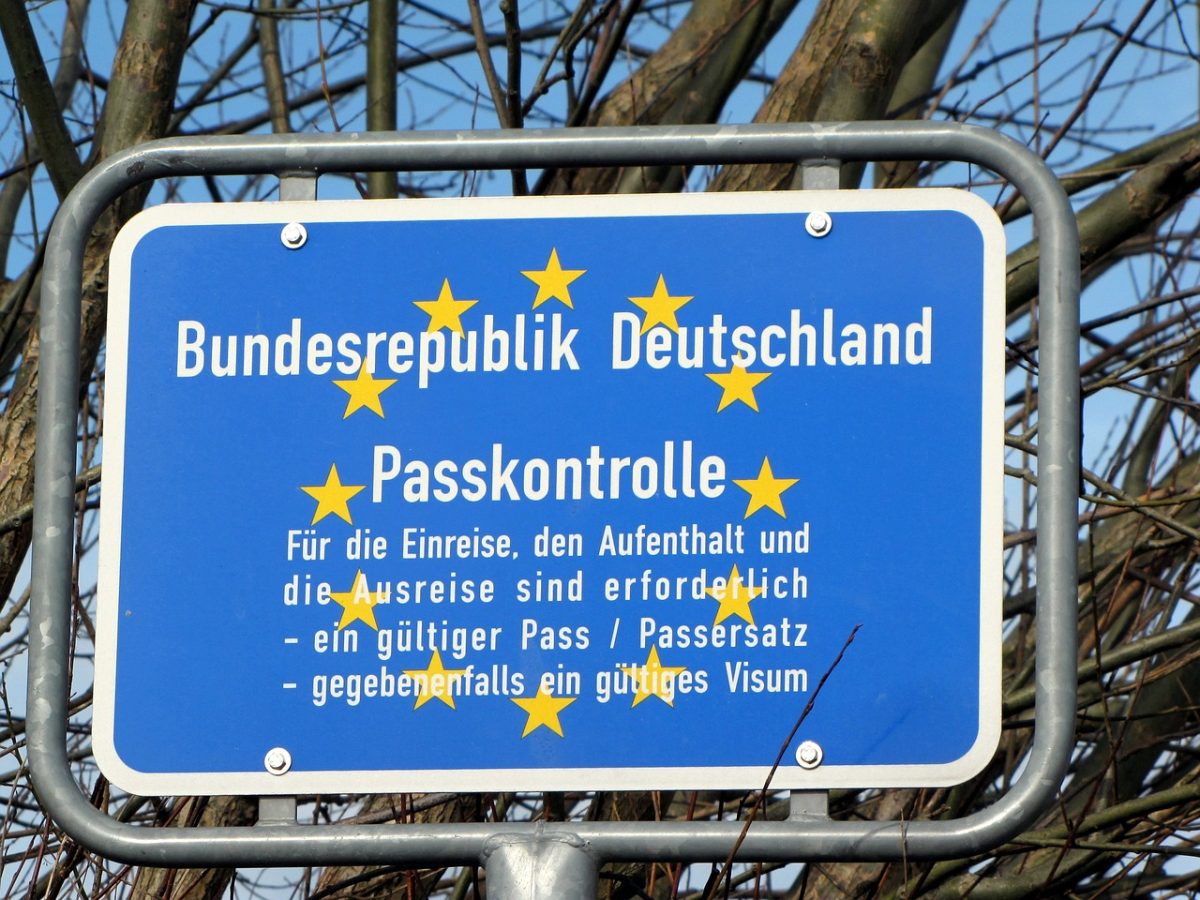
Passport control signs can decide which line you spend the next hour in. International arrivals often split passengers into lanes for citizens, residents, visitors, families, electronic gates, crew, or special assistance. When travelers follow the crowd without reading the lane labels, they can reach the front and be sent back to the start.
The sign matters for anyone traveling with children, mixed-nationality groups, visas, residence permits, or connecting international flights. The wrong lane can create stress, delay baggage pickup, or compress the time needed for a second flight. Pause before entering the ropes and compare the sign to the documents in your hand, not just the passport you think will be fastest.
- Check next: whether all people in your group qualify for the same lane.
- Do not split up if one traveler needs help answering entry questions.
Ride-Share Pickup Zone
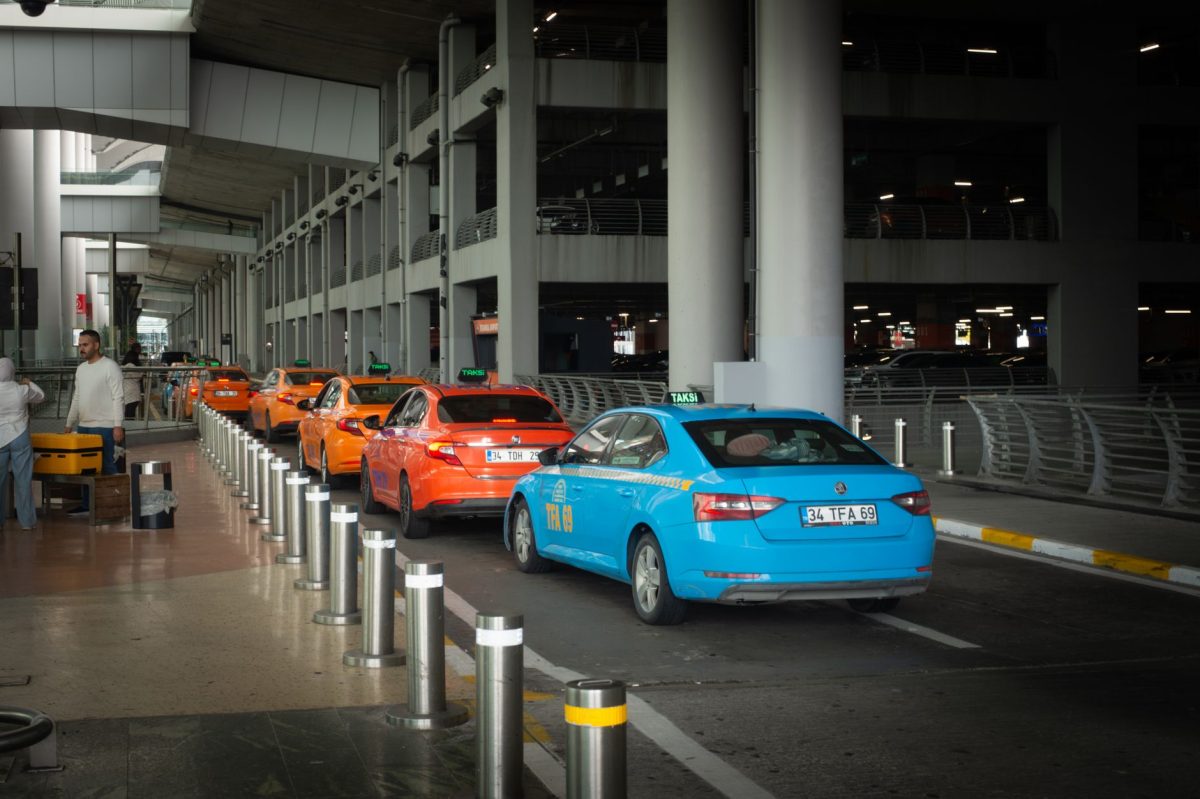
Ride-share pickup signs matter because the app pin is not always the whole story. Airports may push app-based pickups to a garage level, island curb, numbered door, or remote lot. If a traveler waits at arrivals while the driver is routed somewhere else, both sides can circle, cancel, or rack up extra time.
This sign affects tired passengers, solo travelers arriving late, and groups carrying several bags. It also matters at airports where taxis, hotel shuttles, rental car buses, and app rides all use different curbs. Before requesting the car, look for the posted pickup zone, door number, level, and lane. Then match that exact wording inside the app so the driver sees the same location.
- Check next: terminal, level, door number, and pickup zone letter.
- Avoid guessing from a screenshot if airport traffic has rerouted pickups.
The best airport habit is simple: pause at every decision point and read the signs before following the crowd. Terminal, bag drop, security, passport control, and pickup-zone signs are not decoration. They are the airport quietly telling you where the costly mistakes usually happen.
This article was created with AI assistance and reviewed for clarity, sourcing, and editorial quality.
