
The largest passenger ships ever built are modern cruise ships designed to carry thousands of travelers with the help of advanced engineering, wide open decks, and multi-level public spaces. Their size is measured in gross tonnage, a standard that reflects internal volume instead of weight, making it the most accurate way to compare ship scale across classes and cruise lines. Today’s biggest vessels belong mainly to Royal Caribbean and MSC Cruises, with a few major entries from Costa and P&O. The following list presents the 10 largest passenger ships ever built, ranked strictly by gross tonnage, using current fleet data and technical references.
1. Icon of the Seas
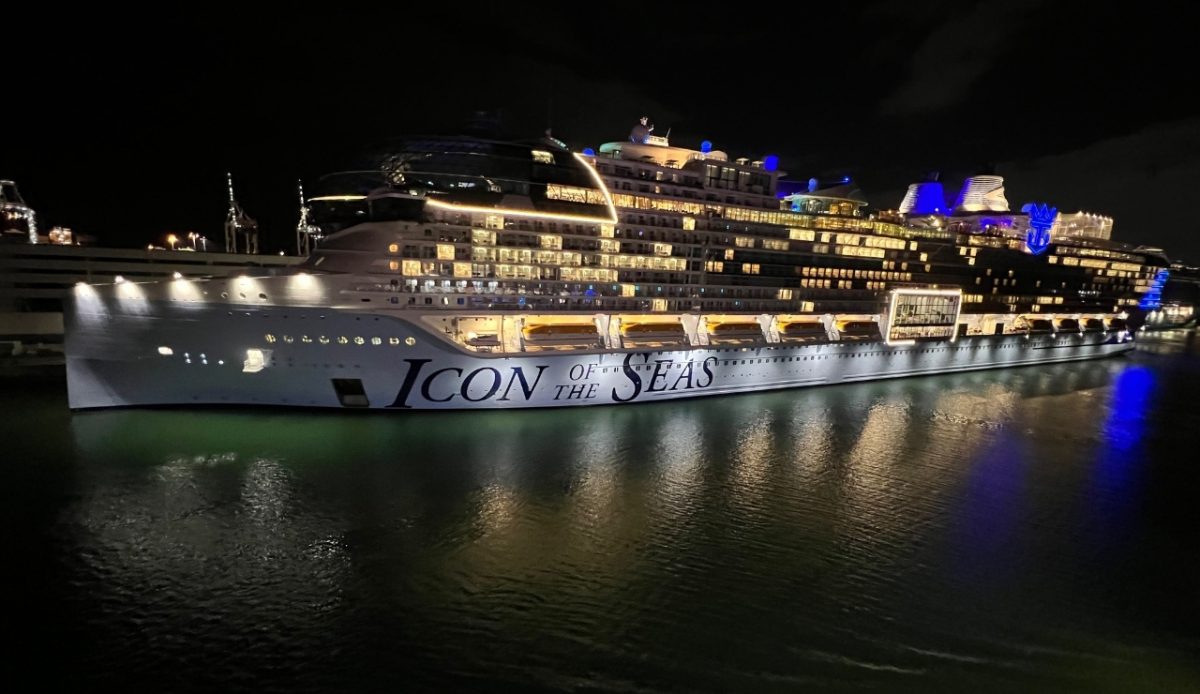
Icon of the Seas is the largest passenger ship in history, with a gross tonnage of about 248,663. Entering service for Royal Caribbean in 2024, it measures roughly 365 meters in length and carries more than 5,600 guests at double occupancy, with maximum capacity exceeding 7,000. The ship uses multiple neighborhoods spread across more than twenty decks and includes a full water park, extensive dining options, and large entertainment areas. From an engineering standpoint, its scale sets a new record, exceeding all existing Oasis-class ships and marking a clear shift toward even larger vessel design in the cruise sector.
2. Star of the Seas
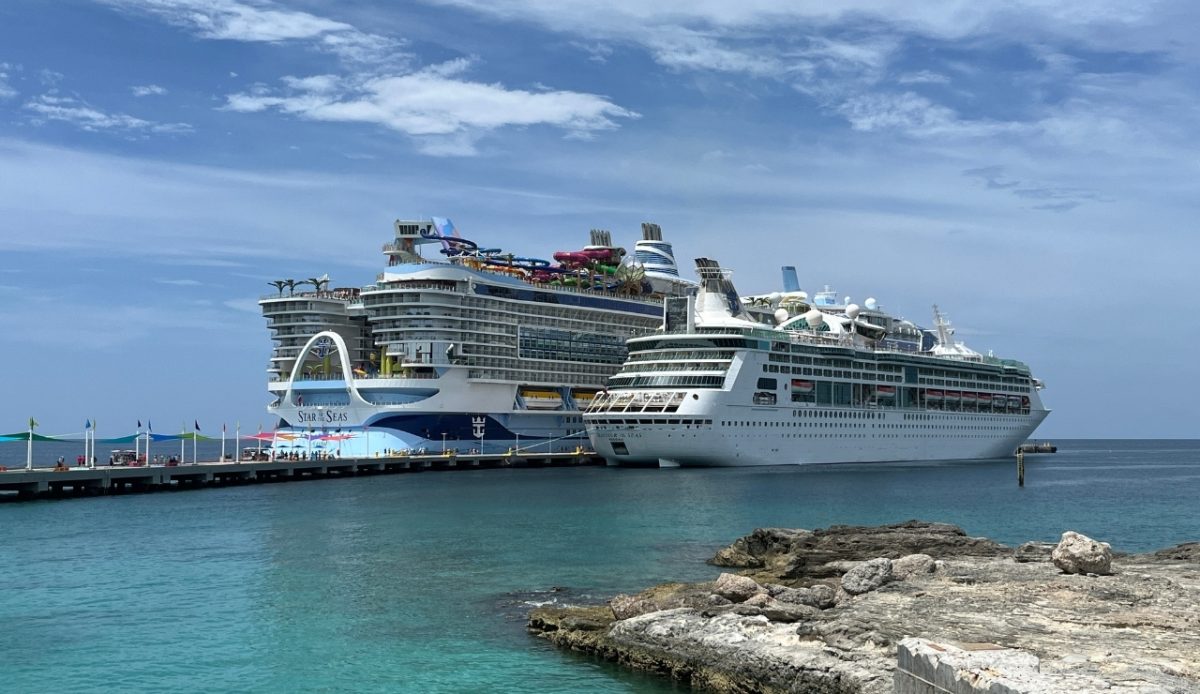
Star of the Seas matches Icon of the Seas in gross tonnage at about 248,663, making it tied for the largest passenger ship ever built. Scheduled to enter service in 2025 for Royal Caribbean, it follows the same basic structure as Icon, with a length of just over 364 meters and similar width and height. Capacity at double occupancy sits around 5,600 guests, with a higher maximum when additional berths are used. The ship features updated entertainment and dining options, but its size is the key point for this ranking. Star and Icon form a new class that stands ahead of every earlier cruise ship in overall volume.
3. Utopia of the Seas
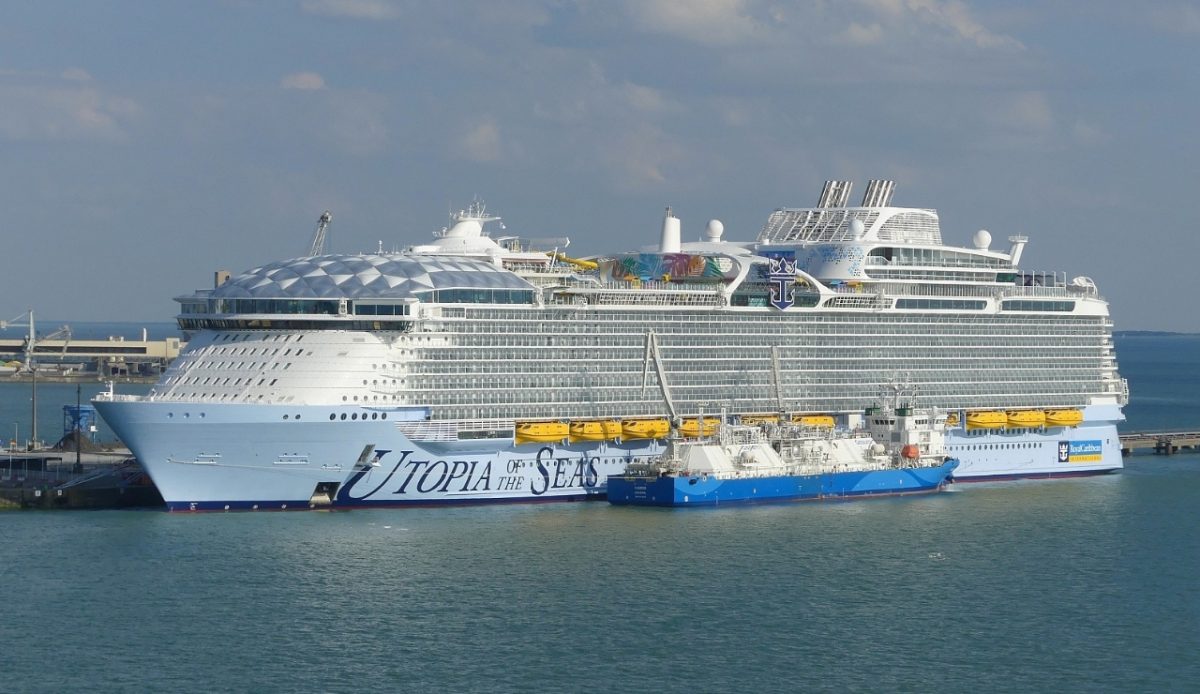
Utopia of the Seas is an Oasis-class ship with a gross tonnage of about 236,473, making it the largest vessel in the class and the third-largest passenger ship ever built. Delivered in 2024, it measures about 361 meters in length and accommodates over 5,600 guests at double occupancy. Utopia follows the Oasis-class design with open central neighborhoods and extensive outdoor areas. Its high volume places it just below the Icon-class pair but above all earlier Oasis-class ships. Utopia demonstrates how the class has expanded over time while keeping the same overall structural arrangement.
4. Wonder of the Seas
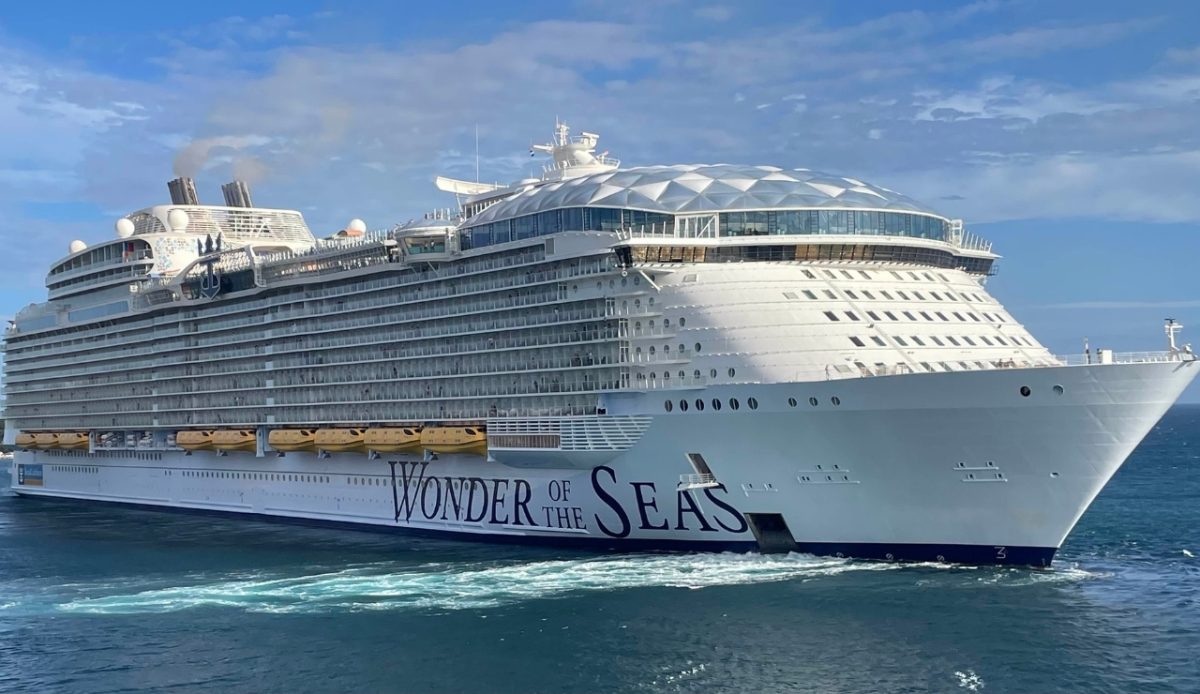
Wonder of the Seas held the title of the world’s largest cruise ship before the arrival of the Icon class. It has a gross tonnage of about 235,600 and stretches roughly 362 meters long. Entering service in 2022, it carries around 5,700 guests at double occupancy with a much higher maximum capacity. Wonder maintains the typical Oasis-class layout with multiple decks of public venues and a split-superstructure design. In gross tonnage, it sits just behind Utopia of the Seas but remains larger than the remaining Oasis-class ships that follow in the ranking.
5. Symphony of the Seas
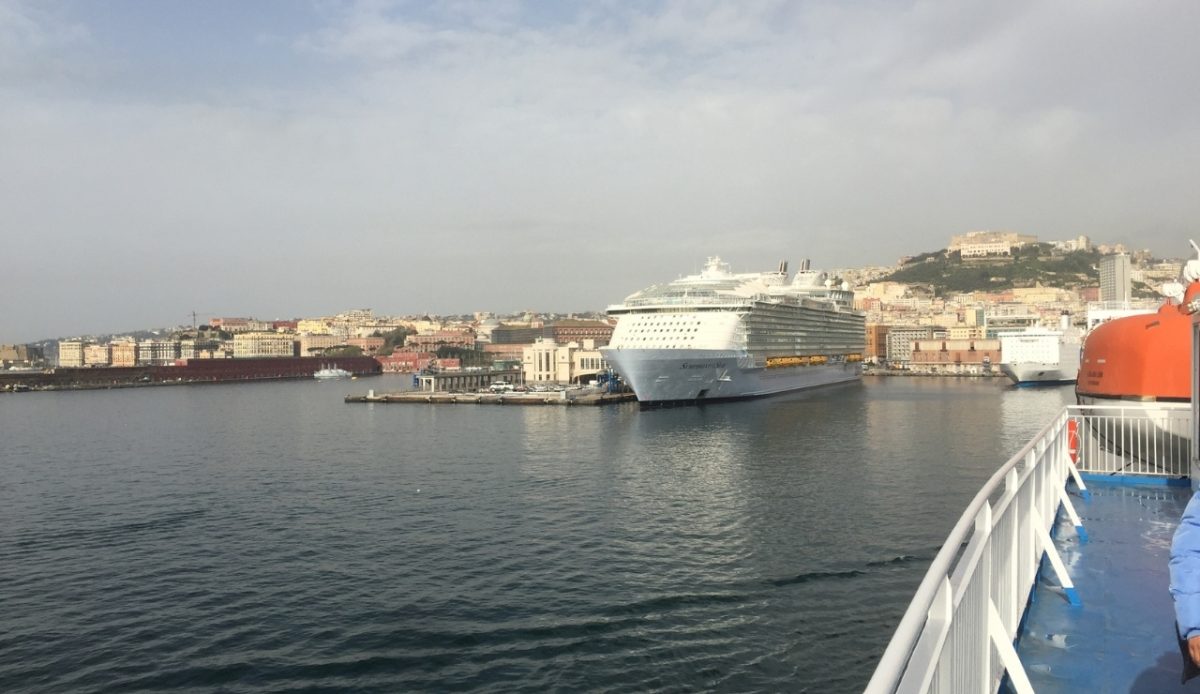
Symphony of the Seas, another Oasis-class ship, comes next with a gross tonnage of about 228,081. Delivered in 2018, it measures around 361 meters in length and carries about 5,500 passengers at double occupancy. It held the record as the largest cruise ship in the world when it entered service. Symphony includes a large number of entertainment spaces, dining areas, and outdoor zones. While later Oasis-class ships gained more volume, Symphony remains one of the largest passenger vessels ever built and serves as a benchmark for earlier mega-ship design.
6. Harmony of the Seas
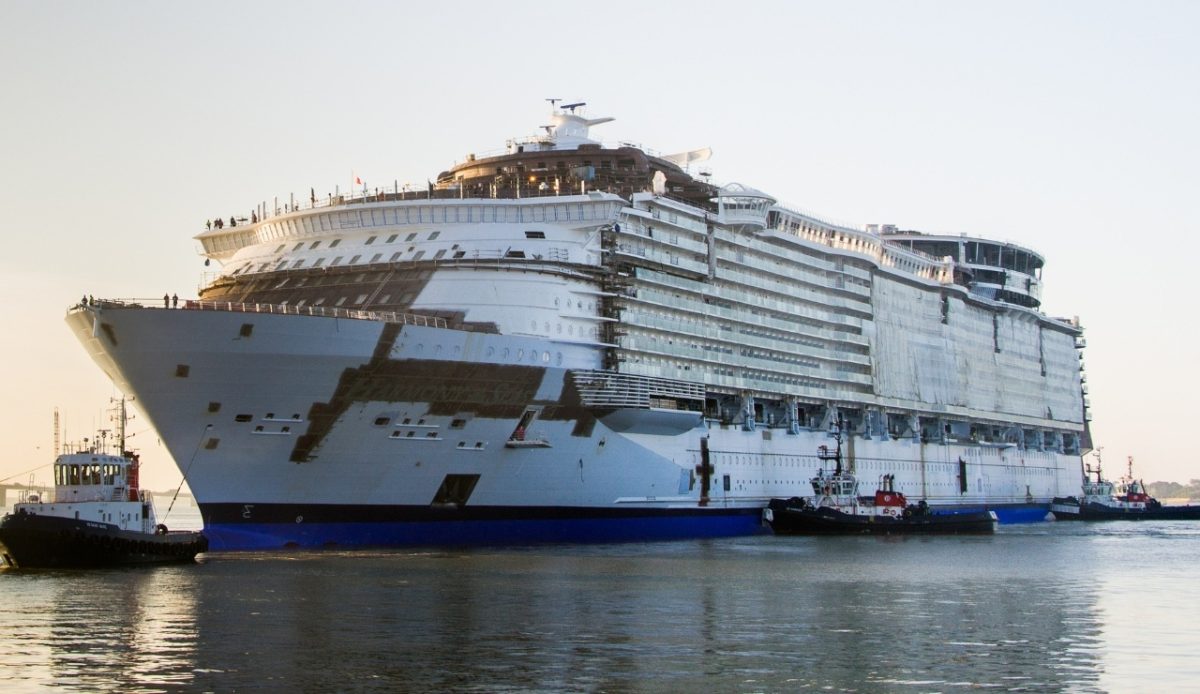
Harmony of the Seas ranks next with a gross tonnage of 226,963. Entering service in 2016 for Royal Caribbean, it measures roughly 362 meters long and carries close to 5,500 guests at double occupancy. Harmony follows the Oasis-class structure with a central open area, large sports deck, and wide public spaces. It slightly exceeds Oasis of the Seas in volume, which places it ahead of the original ship in the sequence. Harmony’s size reflects the gradual growth of the class over several generations while maintaining similar overall dimensions.
7. Oasis of the Seas
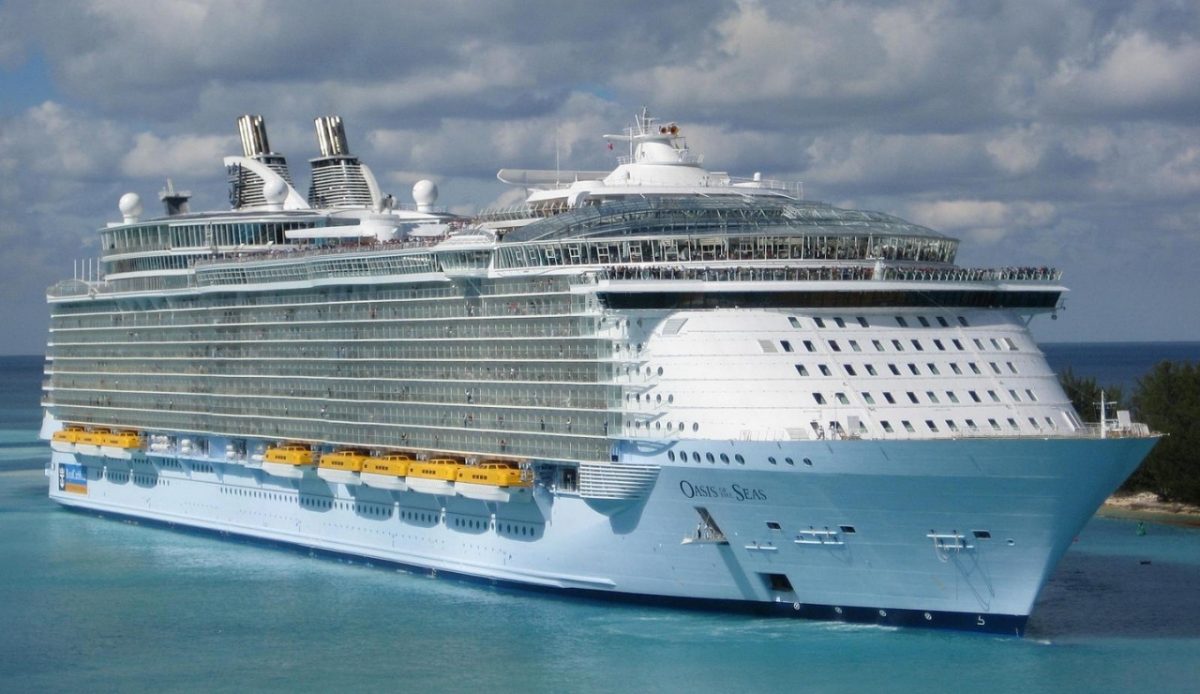
Oasis of the Seas, delivered in 2009, is the first ship of the Oasis class and has a gross tonnage of about 226,838. At roughly 361 meters in length, it introduced a major jump in ship size, surpassing all earlier cruise ships by a significant margin. Oasis carries more than 5,400 guests at double occupancy and includes multiple neighborhoods, a central open-air park, and large theater spaces. Although later ships in the class are slightly larger, Oasis remains one of the biggest passenger ships ever constructed.
8. Allure of the Seas
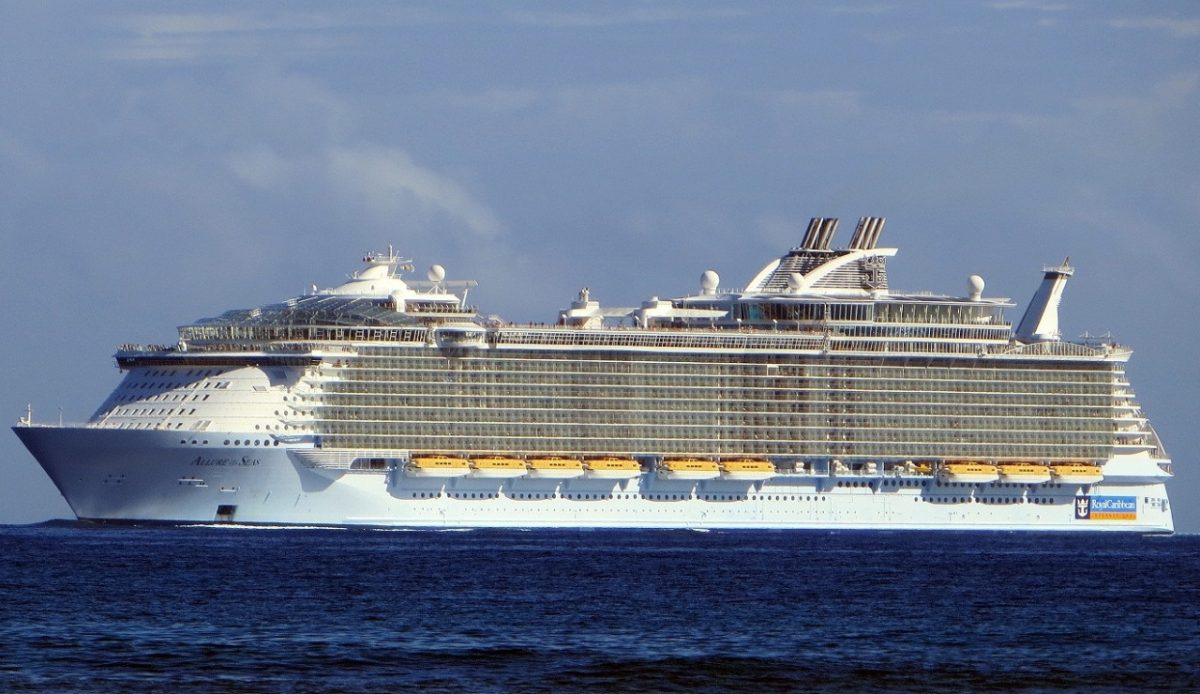
Allure of the Seas follows closely with a gross tonnage of about 226,637. Delivered in 2010, it has nearly identical dimensions to Oasis and accommodates more than 5,400 guests at double occupancy. Allure repeats the Oasis-class formula with open neighborhoods, a large boardwalk area, and extensive dining and entertainment choices. Its tonnage places it just behind Oasis, but the difference between them is small, showing how closely the early ships in the class were designed in terms of scale.
9. Costa Smeralda
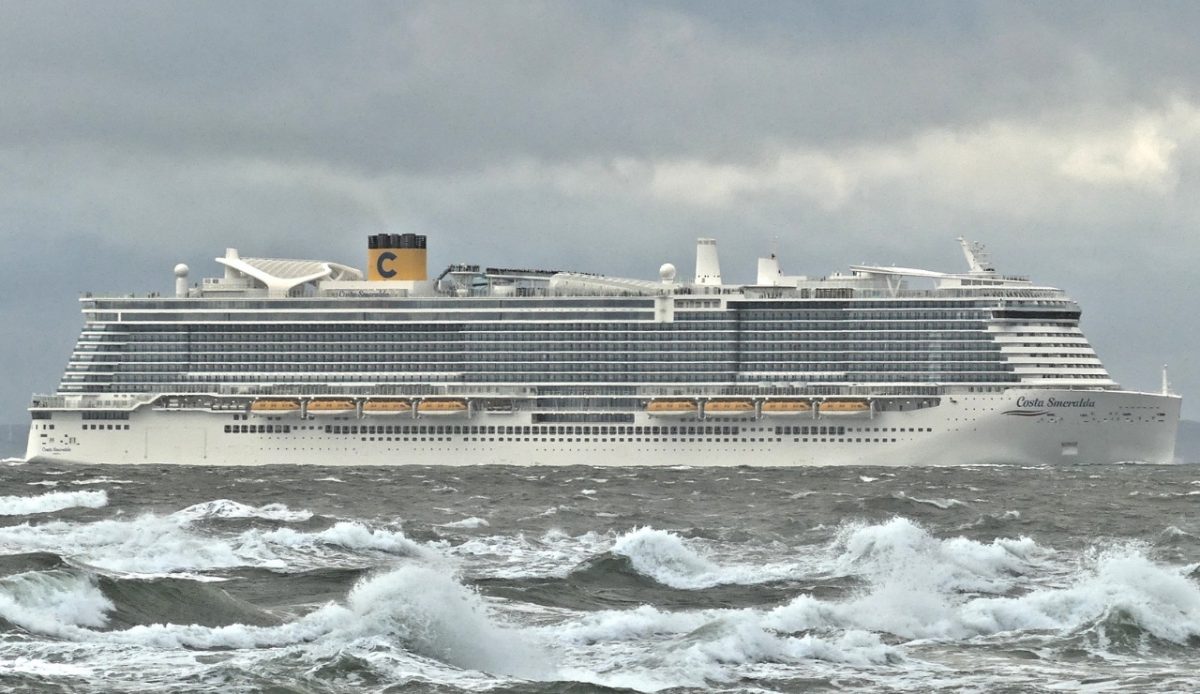
Costa Smeralda, sailing for Costa Cruises, carries a gross tonnage of about 185,010. Introduced in 2019, it belongs to the Excellence class and measures roughly 337 meters long. Passenger capacity sits around 5,200 at double occupancy. The ship uses LNG and features a multi-deck indoor promenade along with extensive outdoor areas. Its volume places it slightly below Arvia but still within the top group of mega-ships worldwide.
10. Costa Toscana
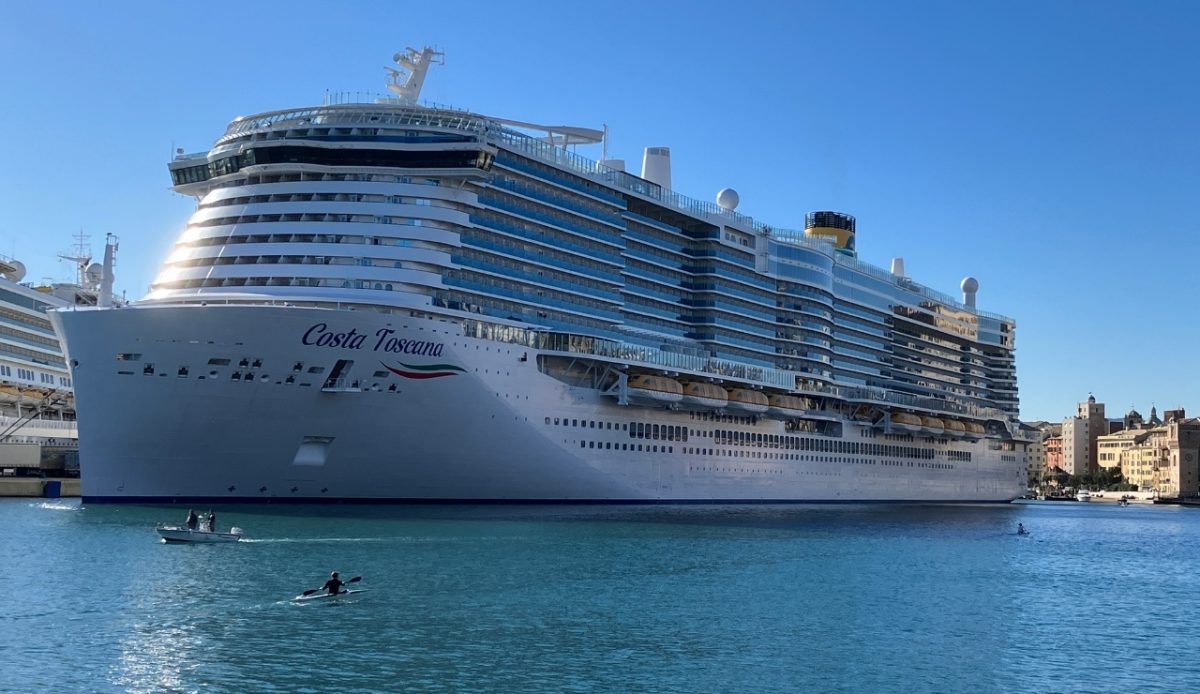
Costa Toscana is a sister ship to Costa Smeralda with the same gross tonnage of about 185,010. Delivered in 2021, it matches the Excellence-class design with a length of 337 meters and a similar passenger capacity. Toscana uses LNG fuel and includes open public spaces, large entertainment zones, and a multi-level promenade. It ranks alongside Costa Smeralda due to the nearly identical published volume.
