
Spain is known for its long coastline, clear water, and beaches that suit every type of traveler. The country has more than 3,000 miles of shore spread across the Mediterranean, Atlantic, Canary, and Balearic Islands. Some beaches attract visitors for their calm and shallow water, while others draw surfers and nature lovers with stronger waves and open landscapes. Facilities, cleanliness, and access vary by region, but all share a sense of care for the sea. The following beaches highlight Spain’s most scenic and reliable coastal destinations for travelers who value both comfort and natural beauty.
1. Ses Illetes, Formentera
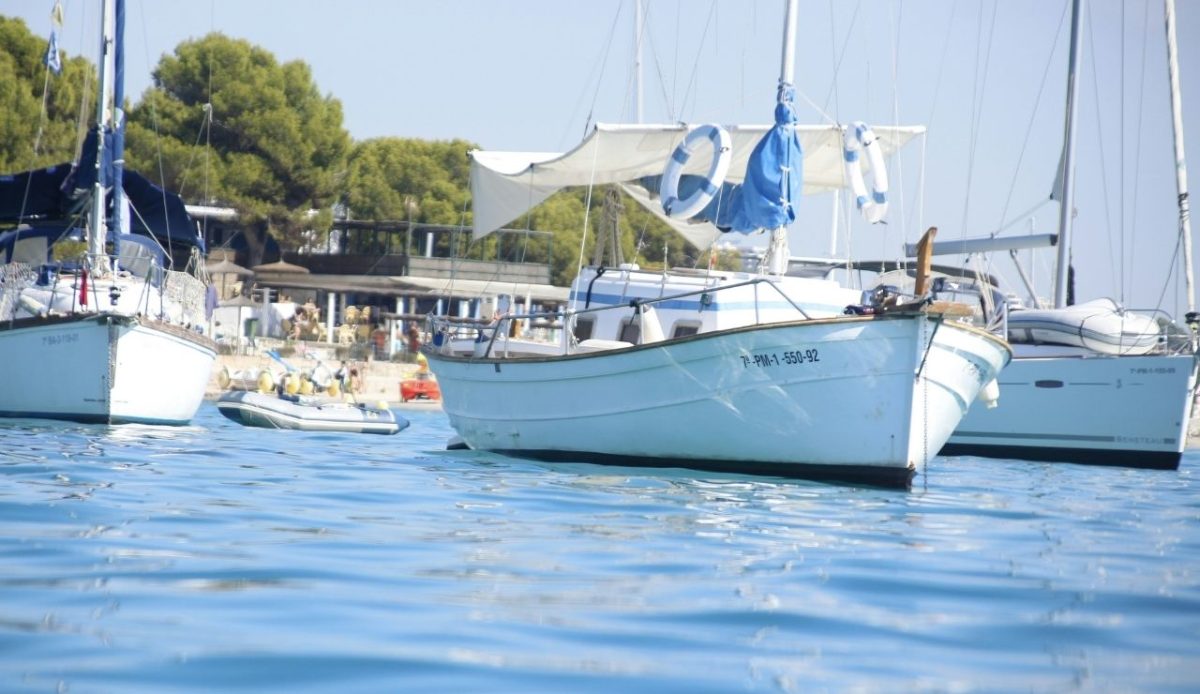
Located within the Ses Salines Natural Park, Ses Illetes stretches across a narrow sandbar surrounded by shallow turquoise water that looks almost transparent. Visitors can walk far into the sea before it deepens, creating a calm space for swimming and wading. The beach is protected, so development stays minimal, keeping its natural look intact. Because parking fills quickly, arriving early or cycling in is recommended. With gentle waves, white sand, and small beach cafés, Ses Illetes remains one of the most photographed and loved beaches in the Balearic Islands.
2. Playa de Rodas, Cíes Islands
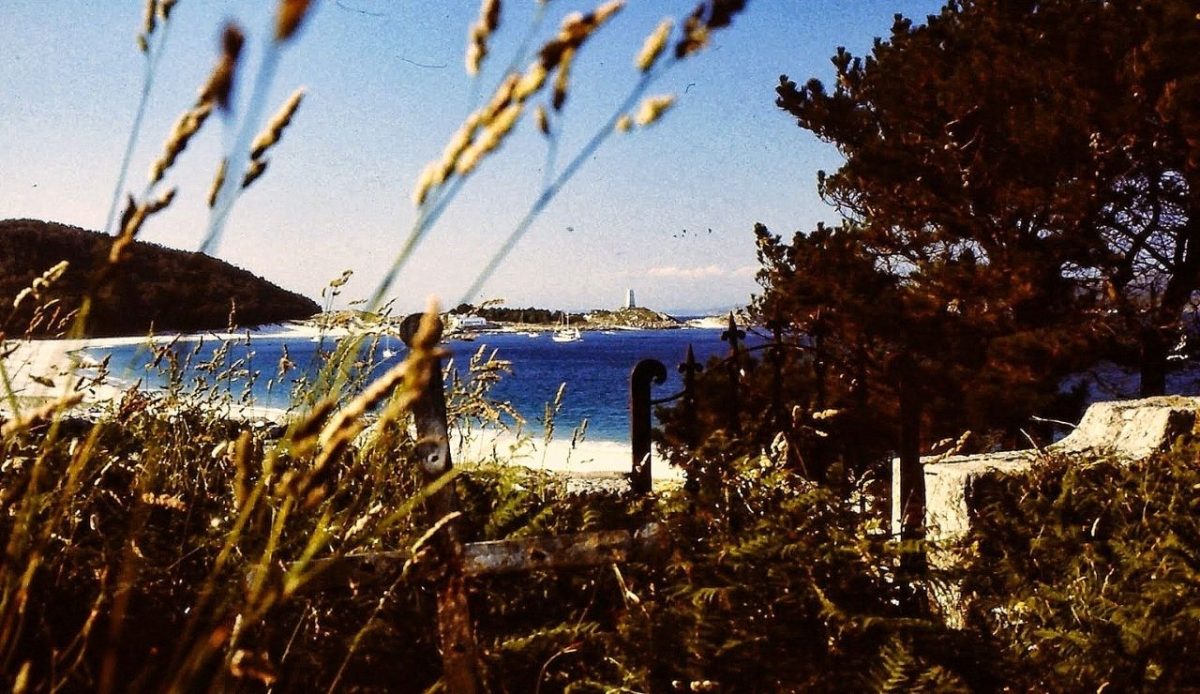
Often ranked among the best beaches in the world, Playa de Rodas forms a perfect crescent of fine white sand bordered by pine forest and calm Atlantic water. It lies within the Atlantic Islands of Galicia National Park, which limits visitors to protect the area’s wildlife and dunes. Reaching it involves a ferry ride from Vigo and a short walk through shaded trails. The scenery feels pristine, and the temperature of the sea brings a refreshing chill. With limited services and no hotels nearby, Playa de Rodas appeals to travelers who appreciate peace, clean air, and natural surroundings.
3. Playa de Mónsul, Almería
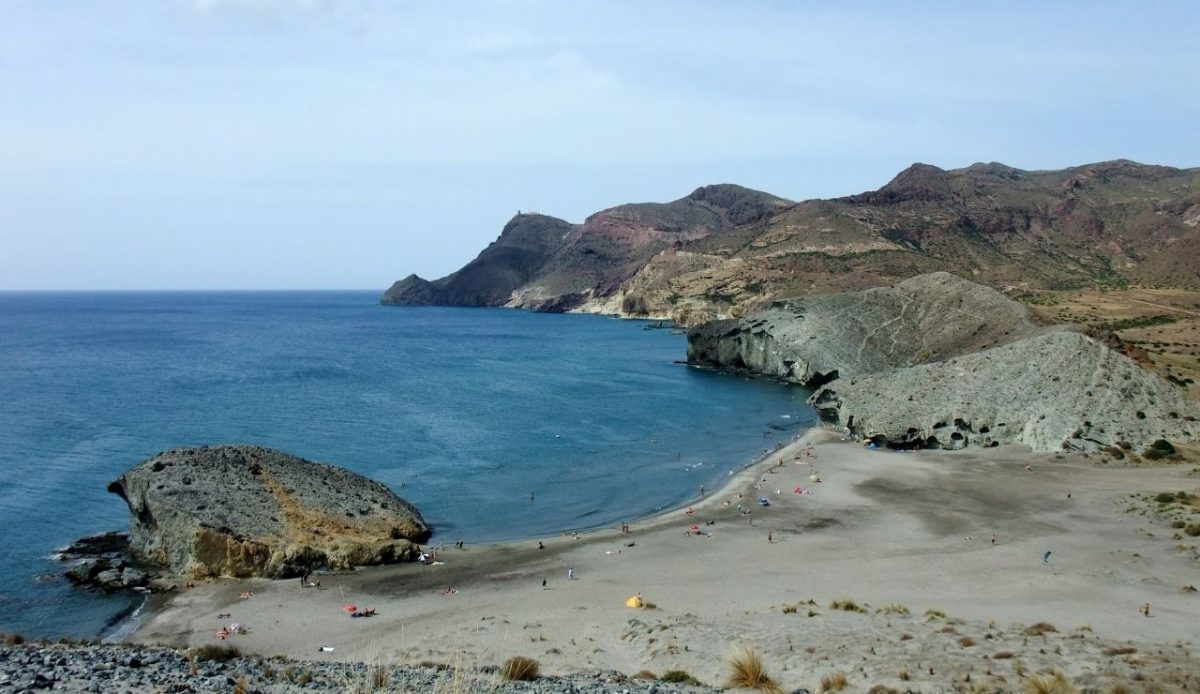
Tucked inside Cabo de Gata–Níjar Natural Park, Playa de Mónsul is known for its volcanic cliffs, dark rock formations, and golden sand. Its curved shoreline and large central boulder give it a distinctive look that has appeared in several films. The beach remains untouched by major construction, creating a strong sense of wilderness. Parking and access roads are regulated in summer, which helps preserve their condition. Clear water and shallow entry make it suitable for snorkeling near the rocks. Visitors who come prepared with water and shade find one of Spain’s most photogenic and peaceful natural beaches.
4. Playa de Bolonia, Tarifa
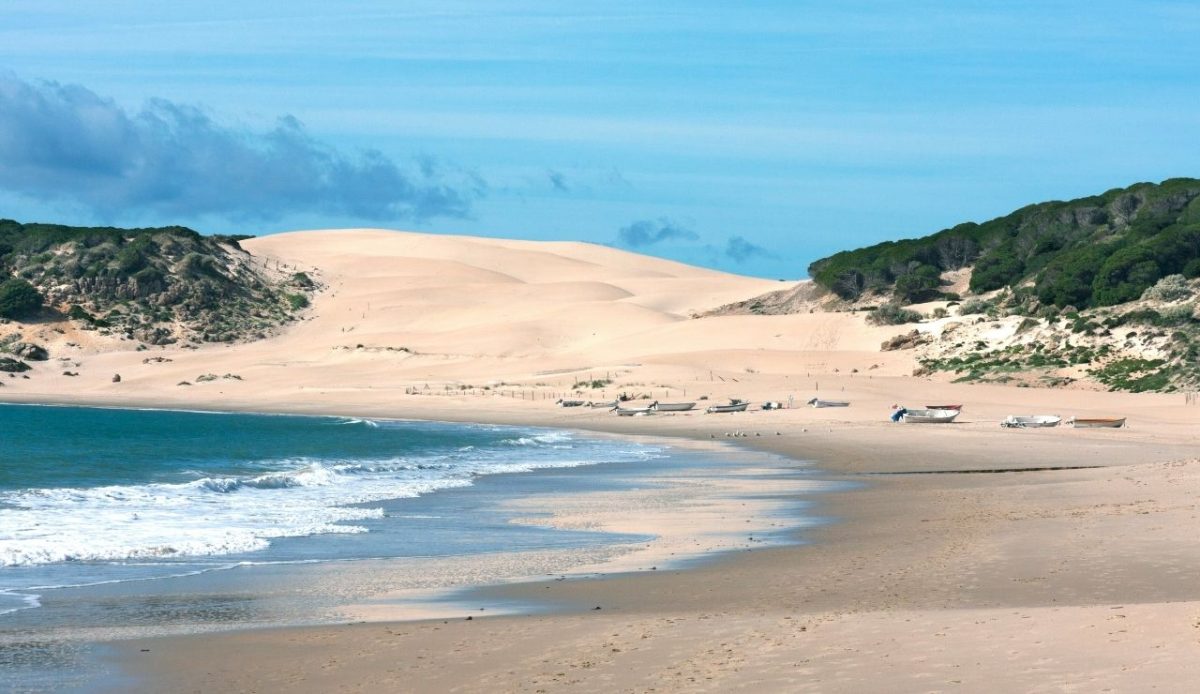
Stretching along the southern coast near Tarifa, Playa de Bolonia is a wide, wind-swept beach where the Atlantic meets rolling dunes. Behind it stand the Roman ruins of Baelo Claudia, adding historical depth to the setting. The area attracts both swimmers and windsurfers, depending on the day’s conditions. The beach has a relaxed energy and remains mostly undeveloped except for a few small restaurants. Walking up the large dune offers striking views of Morocco across the Strait of Gibraltar. Those who prefer wide open spaces and natural backdrops often find Bolonia to be one of Andalusia’s most rewarding stops.
5. La Concha Beach, San Sebastián
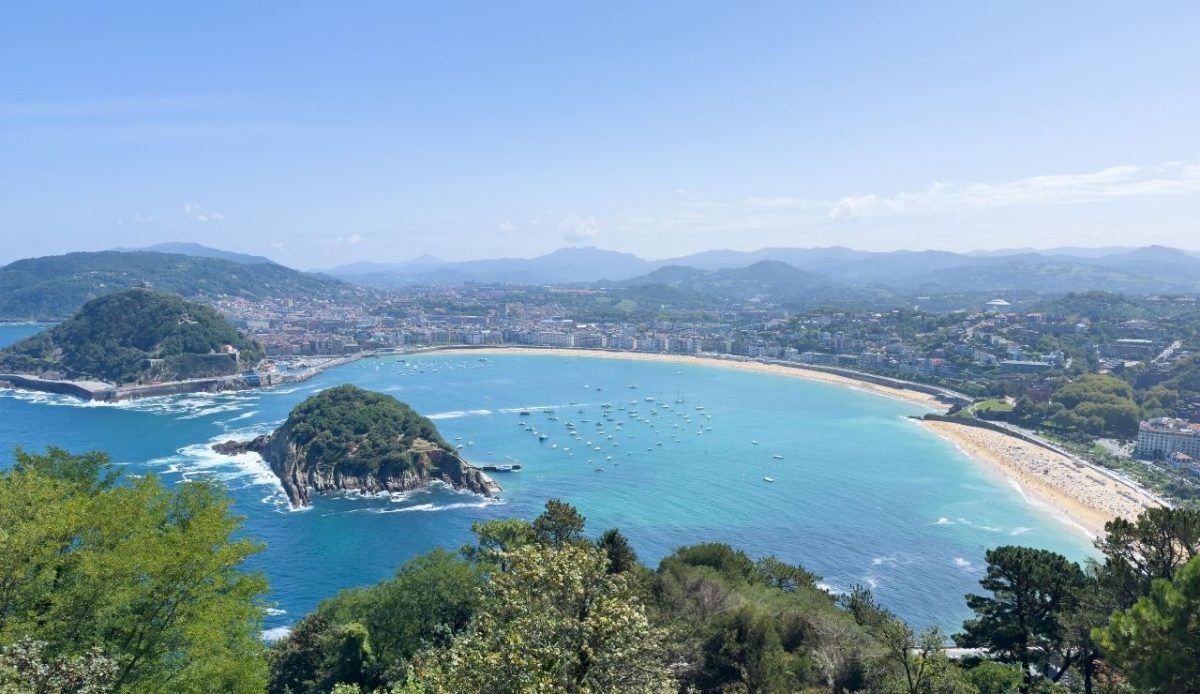
Shaped like a natural shell, La Concha stretches gracefully along San Sebastián’s city bay, offering a blend of urban life and seaside calm. The promenade above the sand draws walkers year-round, while the beach itself provides calm waters ideal for swimming. Cafés, hotels, and cultural spots are all within reach, making it perfect for travelers who like convenience without losing coastal charm. Lifeguards and clear zoning make it family-friendly, and the water stays relatively warm in summer. At sunset, lights from the city reflect over the bay, completing one of northern Spain’s most recognizable beach scenes.
6. Playa de las Catedrales, Galicia
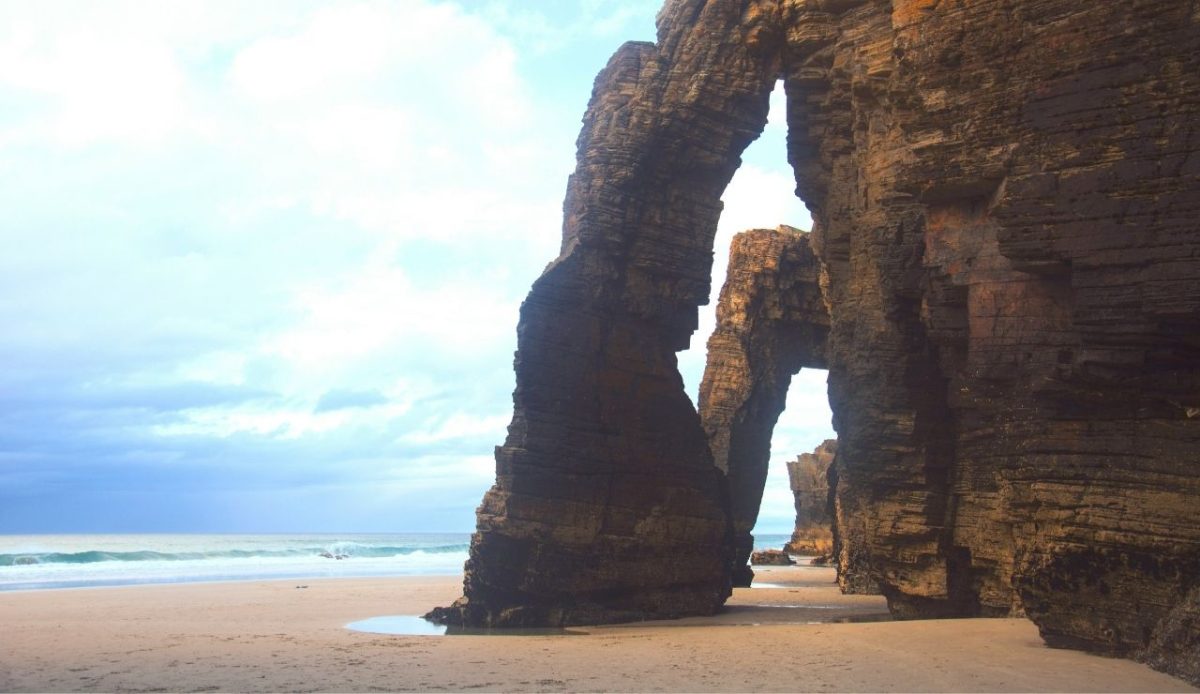
Along Galicia’s northern coast near Ribadeo lies Playa de las Catedrales, famous for its towering rock arches and natural tunnels carved by the Atlantic. At low tide, visitors can walk through these formations, which resemble the columns of a grand cathedral. Because the beach is a protected natural monument, access is controlled during peak months, and booking is required. The setting feels almost otherworldly, especially when sunlight filters through the arches at dawn or sunset. While swimming is limited due to tides and currents, exploring the rock paths makes this one of Spain’s most visually striking coastal sites.
7. Playa de Muro, Mallorca
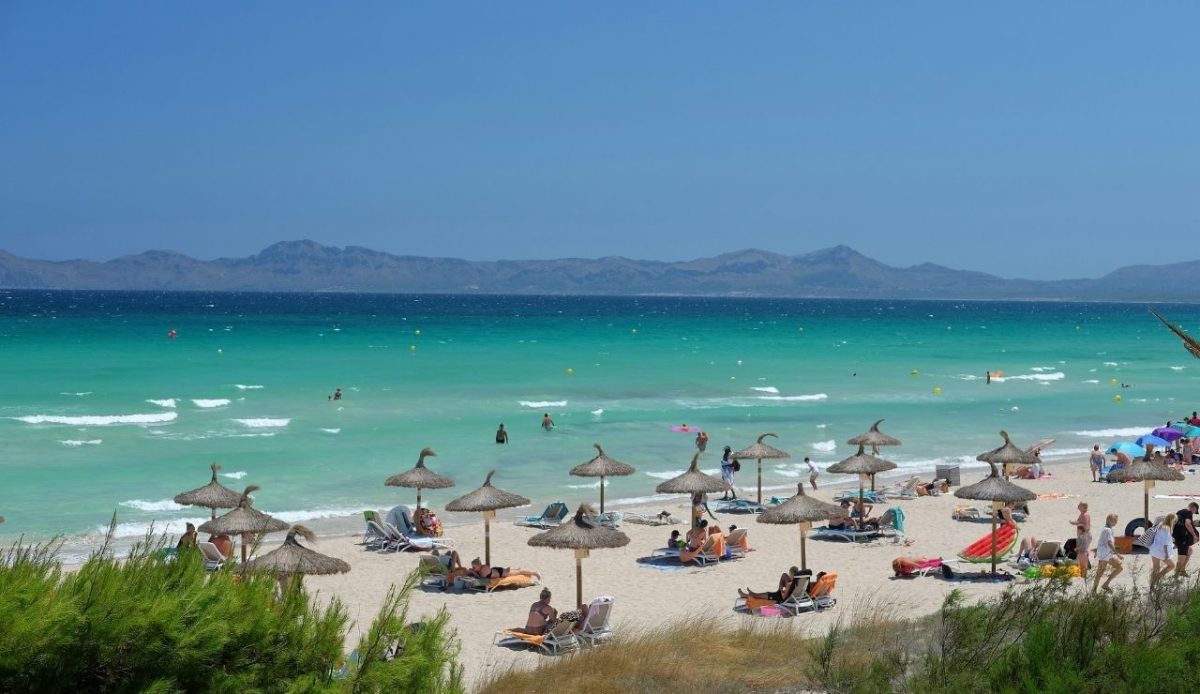
On Mallorca’s northeast coast, Playa de Muro presents four miles of soft golden sand framed by dunes and pine forest. It’s one of the island’s most family-friendly beaches due to its shallow, clear water and well-maintained facilities. Sunbeds, restrooms, and lifeguards ensure comfort, while nearby restaurants serve fresh seafood and local dishes. The calm conditions suit swimming and paddleboarding, and there are shaded areas for relaxing away from the midday sun. The beach connects easily to Alcúdia Bay, giving visitors the choice of quiet sections or livelier zones. Playa de Muro stands out for its balance between comfort and natural beauty.
8. Las Canteras, Gran Canaria
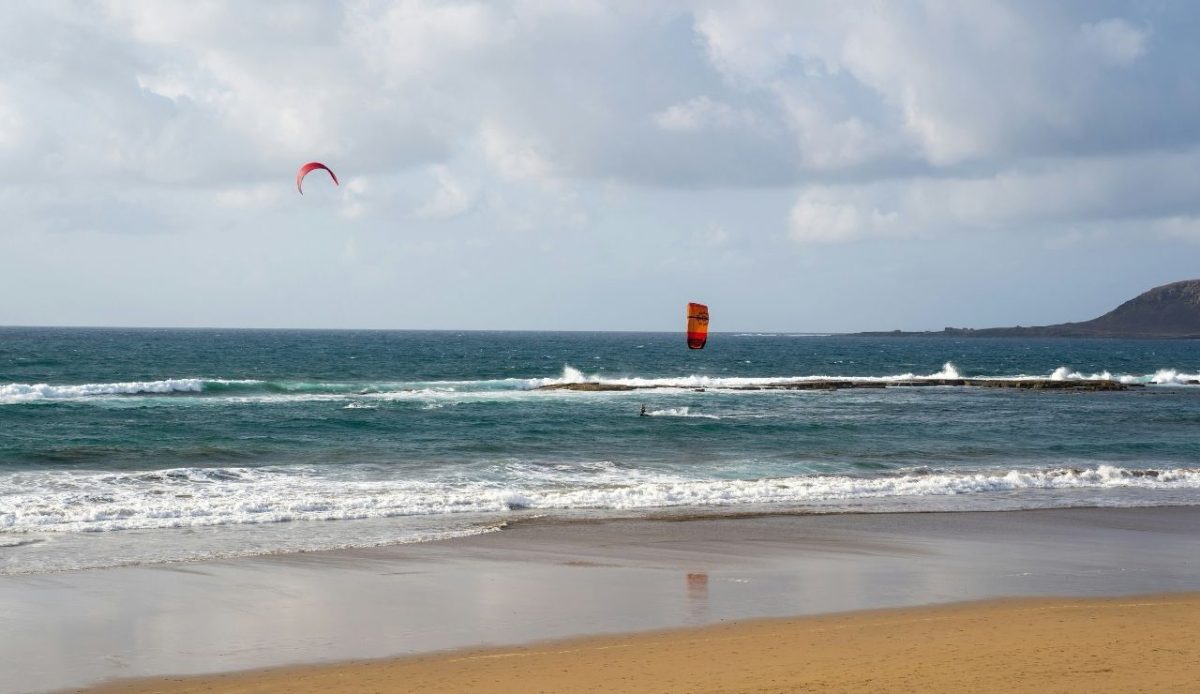
Las Canteras in Las Palmas is one of Spain’s best urban beaches, stretching for over two miles along a natural reef that shelters calm swimming areas. Locals and travelers share the promenade, where cafés and small shops create a lively rhythm from morning until night. Snorkelers enjoy exploring the reef’s marine life just a few feet from shore, while surfers gather at the La Cícer end for steady breaks. The city maintains excellent cleanliness and safety standards year-round. Even at sunset, the beach stays active with families, joggers, and musicians—proof that city life and seaside calm can exist side by side.
9. Playa de Famara, Lanzarote
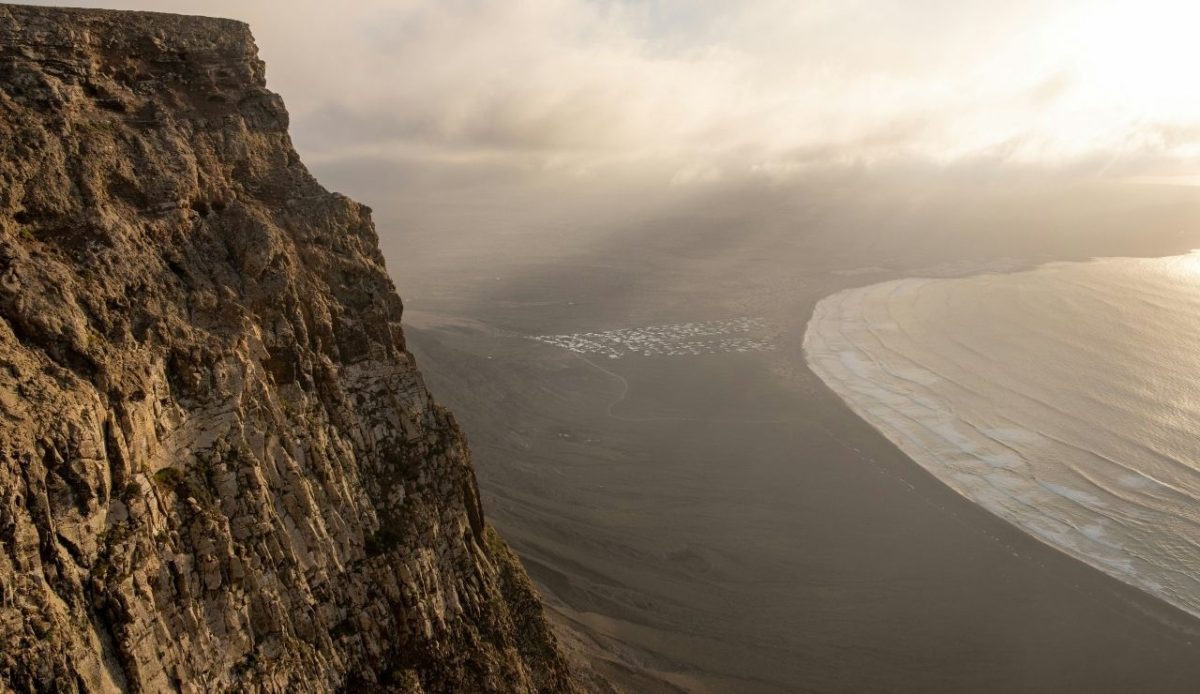
Framed by dramatic cliffs on Lanzarote’s northwest coast, Playa de Famara offers nearly four miles of golden sand and consistent surf. It attracts kiteboarders and surfers year-round, yet there’s plenty of room for peaceful walks and quiet observation. The nearby fishing village of Caleta de Famara adds local color with small restaurants serving fresh catch. Winds can be strong, so visitors often bring light jackets and enjoy the cooler air compared to the southern beaches. With its open views, warm light, and raw natural energy, Famara captures the spirit of the Canary Islands better than many tourist-heavy resorts.
10. Cala Comte, Ibiza
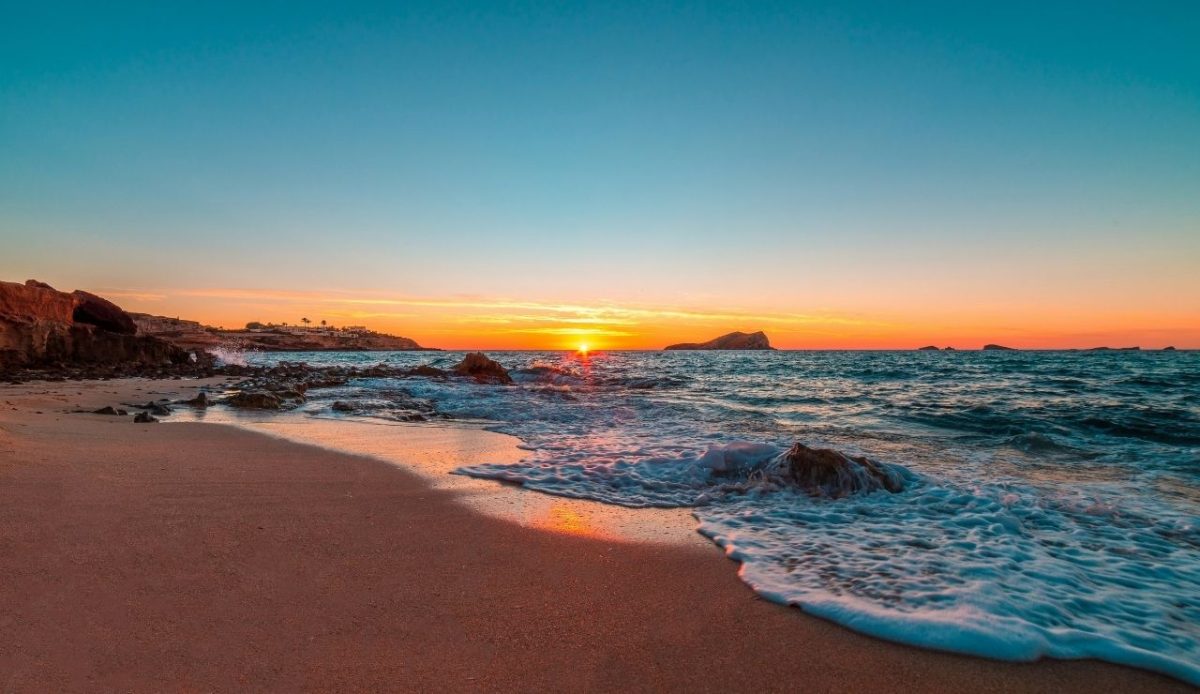
Cala Comte, also called Platges de Comte, lies on Ibiza’s western coast and is known for crystal water that shifts shades from turquoise to deep blue. Several small coves form this beach, each offering calm, shallow areas perfect for swimming. Offshore islets add to the view, creating a sense of space that feels both open and intimate. The sunsets here are among the island’s best, drawing visitors to nearby terraces for evening views. While it can get busy in summer, the area maintains a relaxed energy. The beach’s clear water and bright sand make it ideal for snorkeling and photography.
